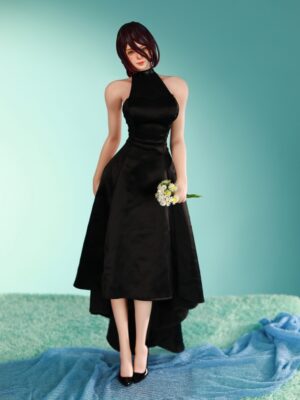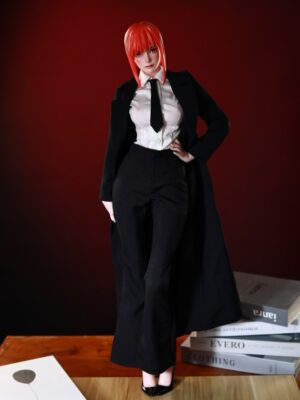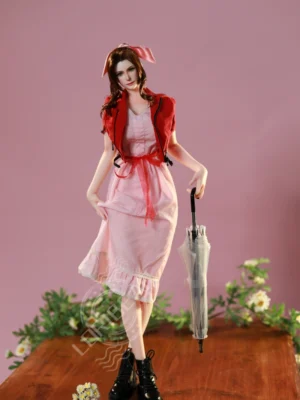
Tifa Lockhart Figure: Bringing Tifa Into Real Life


Tifa Lockhart Figure: Why I Wanted to Bring the Tifa in My Memory Into Real Life
The first time I truly decided to create this tifa lockhart figure was not while studying reference art, and it was not during product research either. That decision came on an ordinary winter night when I was clearing old display samples from a corner of my warehouse. At the bottom of a worn cardboard box, buried under other forgotten pieces, I found an old Tifa figure I had bought years ago.
The packaging was faded, the plastic window was cracked, and the printed insert inside had already started to curl at the edges. Even so, I recognized her immediately. Her long black hair, short skirt, gloves, boots, and familiar outline were all still there. From a distance, it still looked like a decent piece, which was exactly why I wanted to take it out and examine it more carefully.
The Night I Realized Something Was Missing
Once I placed that old figure under the light, the problems became impossible to ignore. The hair was stiff and blocky, like one molded shape instead of real strands. Her waistline was pulled in too aggressively, clearly designed to flatter the eye rather than support the character. Meanwhile, the legs looked slim but carried no real sense of strength or weight.
What bothered me most was the treatment of the hands. Tifa’s gloves should feel like part of her force, part of her fighting language, yet here they felt light and symbolic. They seemed designed only to tell the viewer, “This is Tifa,” rather than to express who she really was. I stepped back, looked again, and slowly understood why the piece left me cold.
A Good-Looking Figure Still Wasn’t Enough
That old sample was not completely wrong. In fact, it was probably better than many figures that rely only on surface resemblance. Still, it had none of the quiet pressure I remembered from the character herself. The outfit was there. The face was recognizable. The silhouette was familiar. Yet the body did not carry the emotional weight of Tifa at all.
To me, she should never feel like a decorative object frozen in place. Strength is part of her identity, but so is restraint. She can be gentle without feeling weak. She can be beautiful without looking hollow. For readers who want to revisit her official background, Square Enix’s Tifa character profile remains one of the clearest reference points. Because of that, I stopped thinking about making a pretty figure and started thinking about building a figure with presence.

I Wanted More Than a Shelf Display
The next day, I took the old sample out again and studied it with a different mindset. This time, I did not focus on the face first. Instead, I looked at the body logic from top to bottom. Little by little, the real problem became obvious. Many products do not fail because they lack detail. They fail because their direction is wrong from the start.
Too often, Tifa is treated like an image to be looked at rather than a character with physical language. That difference matters. If the shoulders collapse, if the back has no tension, and if the legs are only slim without carrying support, the result may still look attractive, but it no longer feels true. At that point, it is only a model wearing Tifa’s design instead of a figure that genuinely feels like her.
I Designed the Stance Before the Face
For this project, I did not begin with facial features or costume details. I began with stance. In my mind, the stance decides whether a Tifa piece lives or dies. Once that part is wrong, everything else becomes surface repair.
Her center of gravity could not feel floating. The shoulders needed firmness. A controlled waistline mattered, but I did not want the body to become too narrow or visually fragile. As for the legs, length alone was not enough. They had to look capable of carrying the entire figure with confidence.
During sketch development, I changed the silhouette again and again. One early version had a waist that was too tight, which made the whole body look lighter than it should have. Another version had straighter legs, but that one felt rigid. Gradually, I removed the exaggerated choices that only looked “nice” on paper and pushed the design toward something calmer, stronger, and more convincing.
Why I Chose a 1/3 Scale
Scale became the next critical decision. For a character like Tifa, reducing the size too much also reduces the impact. Smaller figures are easier to place and easier to ship, but once the body is compressed, the key qualities start disappearing with it. The shoulder line becomes rushed. The waist-to-hip transition becomes weaker. The legs may stay slim, yet they lose the support that gives the whole form authority.
That is why I chose 1/3 scale. The real value of that scale is not simply size. What matters is the room it gives me to solve the structure properly. At 1/3, the shoulders either hold or they do not. The turn of the waist either looks natural or it does not. Likewise, the lower body either supports the figure believably or falls apart under attention.
Another reason is presence. At this size, the figure does not feel like a small symbol locked inside a display cabinet. Instead, it starts to hold space in the room itself. That difference is far more important to me than scale for scale’s sake.

During Production, I Focused on Tension
Once production began, I kept reminding myself not to be fooled by resemblance. Many figures look correct at first glance and empty at second glance. Usually, that happens because the body is not carrying the character’s internal energy. With Tifa, that energy matters more than any single visual cue.
So I spent less time polishing isolated details and more time adjusting relationships across the whole body. I watched the connection between shoulders and back because that decides whether she can hold herself properly. I kept reviewing the transition from waist to legs because that decides whether she feels lean or flimsy. Just as importantly, I studied the arms and gloves over and over again. For Tifa, those gloves are not decoration. They are part of the action logic.
At one stage, I threw away a version that already looked polished because it was too polished in the wrong way. The figure was attractive, but it had lost pressure. After tightening the upper body and stabilizing the lower half, the design finally moved beyond being merely beautiful and became believable.
Craftsmanship Had to Follow Character
Throughout the process, I kept one rule in mind: craftsmanship is a tool, not the answer. A figure can be packed with technique and still fail as a character piece. In some cases, more detail only hides a weak foundation behind surface richness.
What mattered most to me was making the character feel right. Tifa does not rely on exaggerated drama to command attention. Her strength sits inside the way she holds herself. Because of that, I kept the design disciplined. The lines could not become noisy. The transitions could not become loose. The pose could not lose credibility in pursuit of spectacle. Only after those fundamentals were secure did later material and engineering choices start to matter.
Why I Chose a Full Silicone Body
Material decisions came later, not earlier. Once the proportions, silhouette, and stance felt stable, I moved on to body construction. I chose a full silicone body because it matched the kind of physical presence I wanted. Hard materials can work beautifully for certain display pieces, especially when sharp edges and rigid surface definition are the priority. In this case, though, too much hardness would have worked against the balance that makes Tifa feel like herself.
My goal was not a shell that only looked good in product photos. I wanted fuller volume, smoother transitions, and a softer visual state under light. Full silicone helped me achieve that. In a real room, the difference becomes much clearer. The edges do not die too quickly, the curves do not feel like a hard casing, and the figure holds space with much more conviction. Collectors who want to explore more character-inspired designs can also browse our related Final Fantasy figure collection.

Implanted Hair Made a Big Difference
Hair was another area I refused to simplify. Rather than using a one-piece molded hair structure, I chose implanted hair craftsmanship. That choice mattered because Tifa’s long black hair is not a secondary detail. It is part of her identity and part of the softness that balances her strength.
With implanted hair, the strands fall more naturally and the layering looks finer at close range. More importantly, the result avoids the thick, flat feeling that molded hair often creates. After that change, the figure no longer relied on a hard silhouette alone. It gained a more natural softness, a more mature presence, and a much more convincing finish overall.
Why I Used a Jelly Chest Structure
For the upper body, I did not use one uniform firmness across every area. Instead, I chose a jelly chest structure. The reason is simple: when every part of the body responds in exactly the same way, the figure loses depth and realism.
My goal here was not exaggeration. What I wanted was layered physicality that still remained coordinated with the full body. At 1/3 scale, that distinction matters. The challenge was making the result look natural from multiple angles, especially once the pose changed. If this area is handled poorly, it can easily feel disconnected from the shoulders, arms, and torso. Because of that, I kept the treatment controlled and always put balance first.
The Internal Metal Skeleton Gave the Figure Real Purpose
External appearance was only half the project. Internal structure mattered just as much. I chose an internal metal skeleton and preserved poseable joints because a figure that can only remain in one fixed angle still behaves like a static display piece. Tifa, however, is a character whose appeal is deeply tied to motion, even when she is standing still.
Even so, articulation alone is never enough. More joints do not automatically create a better figure. Wider movement does not automatically create a better design. For articulation to matter, it cannot break the illusion of the character. The skeleton must provide stable support, and the joints must serve the pose instead of drawing attention to themselves. That is why my testing focused less on extreme poses and more on whether the figure still looked right in a relaxed stance, a slight shift of weight, or a restrained pre-action posture.

The Moment It Finally Felt Real
When the finished piece was finally done, I was less excited than I had expected. I simply placed it gently on the bed and looked at it for a long time. The room was quiet. Light fell across the shoulders and the line of the legs, and in that moment I understood why I had been so stubborn about making this figure in the first place.
By then, it no longer felt like a collectible that belonged only on a shelf. Instead, it felt more like a quiet companion in the room. Not because it replaced anyone, but because once it entered a real living space, that familiar sense of calm, strength, and closeness finally moved out of memory and into reality.
Looking at it now, I do not only see the finished specifications. I see the 1/3 scale presence, the fuller body shaped through silicone, the more natural layering created by implanted hair, the controlled depth of the jelly chest structure, and the stable movement made possible by the internal metal skeleton. More than that, I see a figure that finally feels closer to the Tifa I had wanted to bring into real life from the beginning. If you want to see the finished design in more detail, you can explore the full product page.