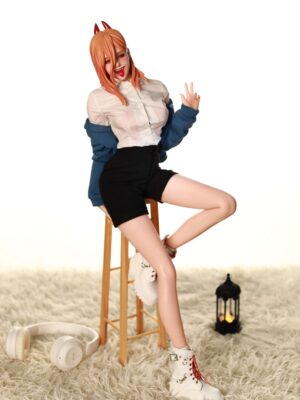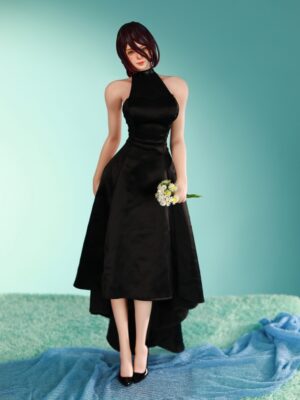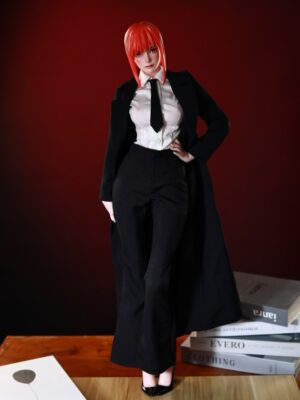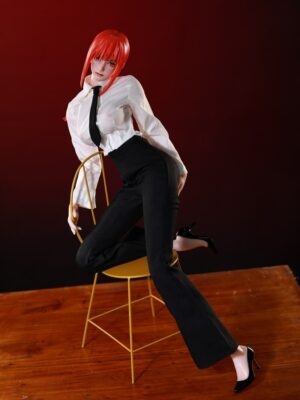
Resident Evil Figurines: Ada Wong Inspired My Design


Resident Evil Figurines: How Meeting Ada Wong in the Game Shaped the Figure I Wanted to Create
What first made me seriously think about resident evil figurines and an Ada Wong figure was not a product page, not someone else’s display shelf, and not a trend I happened to notice online. It started one night when I reopened Resident Evil and decided to run through the game again. By the time I stopped playing, the thing that stayed in my head was not the gunfire, not the chase sequences, and not even the enemies. It was Ada Wong’s way of saying half and hiding half. That feeling stayed with me far longer than anything else.
What I Felt When I First Really Played Resident Evil
The first time I truly got pulled into this series, I knew it was different from most action games.
It did not rush to hand me easy excitement, and it did not rely on cheap jump scares to force a reaction. What held me was the pressure created by limited resources, broken routes, and incomplete information. Every door made me pause for half a second. Every map made me wonder what I had missed.
The corridors felt longer than they were. The lighting felt colder than expected. Even small actions, like checking a room, searching for a key, or deciding whether an enemy was worth the ammunition, could keep me tense for much longer than I wanted to admit. I was not simply moving through a level. I was feeling my way through a world that refused to explain itself clearly.
The Atmosphere Changed the Moment She Appeared
The first time I really noticed Ada Wong was not in a loud or dramatic scene.
There was no oversized gesture and no obvious attempt to create a “highlight moment.” Still, the atmosphere changed the moment she entered the frame. Most of the people I had met before that point were panicking, rushing, or being carried forward by the situation. She did not feel like that at all.
She was quiet, controlled, and measured.
Her movements were minimal, and her voice never overreached. Yet the difference was immediate. She did not feel like a side character passing through the story. She felt like someone who had stepped into the same world with her own purpose and had no intention of explaining it too early.
Why Ada Wong Started to Stay With Me
At first, I did not instantly decide that I liked her.
What kept drawing my attention back to her was not simply her appearance. It was the fact that I could never fully read her. She would step closer, but never fully reveal herself. She would seem helpful, yet still leave enough distance to make me question what she really wanted.
That quality worked perfectly inside Resident Evil.
The game already trains the player to doubt everything. A note on a desk matters. A half-open door matters. A person appearing at the wrong time matters even more. Ada Wong deepened that feeling. She was not a traditional ally, but she was not just a source of trouble either. She felt like someone carrying her own mission through the same plot, only crossing my path when it suited her.
What Made Her Unforgettable Was Her Restraint
The more I played, the more I realized that Ada Wong’s real strength was not beauty, but restraint.
She always sounded as if she was giving only half an answer. She looked at other characters as though she had already understood one layer more than they had. I could tell she was moving closer to the truth, but I could also tell she would never place the whole truth in my hands.
Other characters often rush to explain themselves.
Ada Wong never does.
That sense of reserve made her even harder to forget. As the story moved forward, I kept re-evaluating her. Which side was she really on? How much of what she just said was true? What was she actually trying to get out of this situation? That repeated uncertainty is what slowly turned her into one of the most layered parts of the entire game for me.
If you want to revisit Ada Wong’s role in the series, Capcom’s official Resident Evil character materials offer useful background on why she remains one of the franchise’s most memorable figures.
Why I Started Thinking About Resident Evil Figurines
Many people finish Resident Evil remembering the pressure, the bosses, and the chase sequences.
I remember those things too. Still, years later, the part that pulls me back most often is Ada Wong. She did not become memorable because of one huge dramatic moment. The game built her presence through timing, distance, misdirection, and silence. That is what made her stay.
Because I met her through the game first, I later found that many existing resident evil figurines felt too shallow to me.
Some pieces reproduced the red outfit well. Some had decent facial detail. Some were recognizable from across the room. The problem was that many of them recreated the symbol without recreating the person.
If you enjoy character-driven designs with strong display presence, you can also explore our Resident Evil-inspired collectible figure collection for more pieces built around atmosphere and shelf impact.

I Did Not Want to Recreate a Symbol
Ada Wong is not a character who survives on a dress, a weapon, or one iconic side profile.
What makes her unforgettable is the way players keep rethinking her while the story moves forward. She seems close, but never fully yours. She appears to cooperate, yet always keeps another layer of judgment hidden behind the surface.
So when I first seriously thought about creating her as a figure, I was not asking myself how to make her look “accurate enough.”
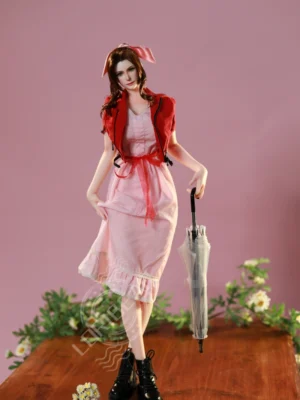
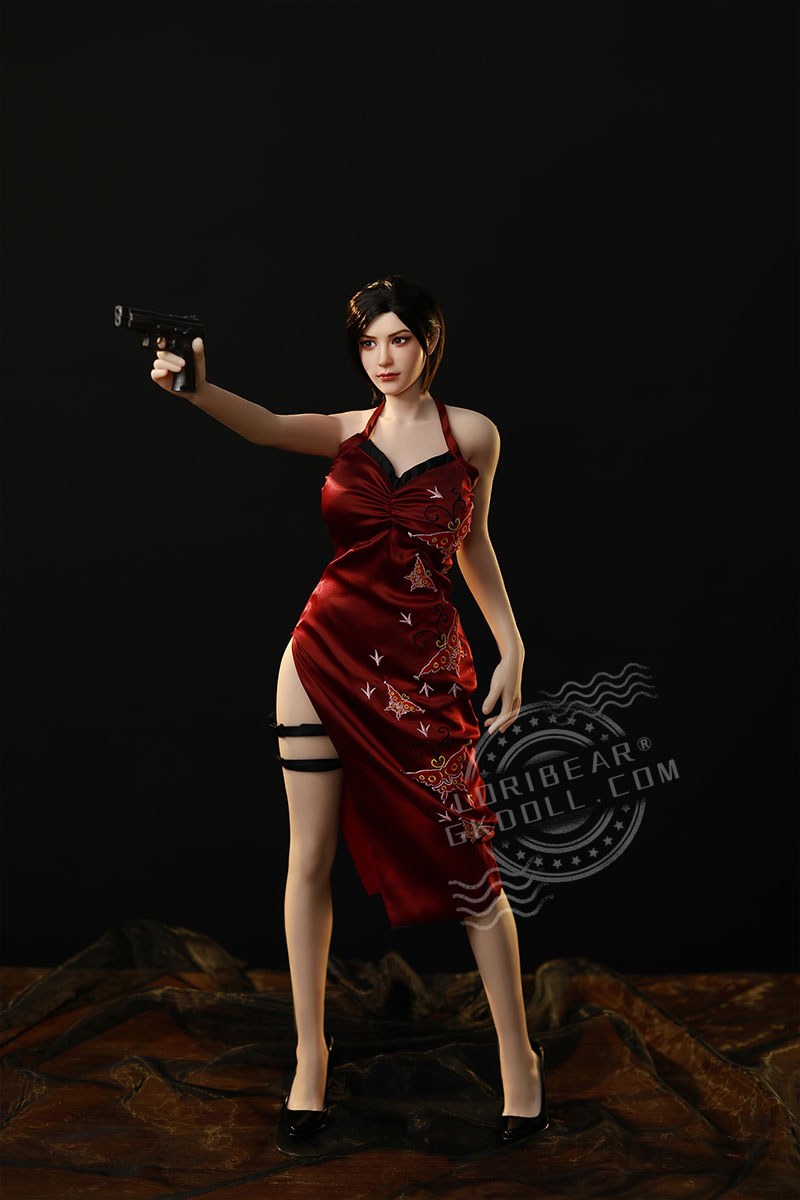
What mattered more to me was how to preserve that complex feeling. To me, a convincing Ada Wong figure should do more than resemble her visually. It should remind anyone who has played the game of that familiar feeling: she is here, but she still has not told the whole truth.
You can also view our Ada Wong-inspired figure page to see how we translate that balance of mystery, posture, and presence into a display-ready collectible.
Before I Started Building Her, I Went Back to the Game
Once I decided to create her, I did not rush to sketch a final product right away.
Instead, I went back to the game and studied her again. I watched the way she carried her weight while walking. I looked at the angle of her chin when she turned her head. I paid attention to how she paused when she was observing someone else.
Ada Wong is difficult because too much expression ruins her.
If the face says too much, she loses the reserve that makes her feel like a spy. If the pose tries too hard, she stops feeling dangerous and starts feeling staged. That is why the reference stage mattered so much. I was not looking for her loudest moments. I was looking for the moments that felt most true to her.
I Started With Her Posture, Not Her Clothes
When I moved into the actual design stage, I did not start with the outfit.
I started with body structure, posture, and balance. Her shoulders could not collapse. Her neck could not feel thick. Her waist and hips could not lean toward a generic idea of sex appeal. Ada Wong’s appeal has never been cheap. She works because her lines are clean, her stance is stable, and she always looks like someone who has kept a final move in reserve.
That is why I spent so much time on her standing posture.
Where the weight sits, how the arms fall at rest, and how relaxed the knees should look all affect the final impression. If the posture goes wrong, no amount of material quality or clothing detail can bring the figure back to the right emotional place.

Why I Chose 1/3 Scale
In the end, I chose 1/3 scale.
That choice was not about making her larger for the sake of size. Ada Wong depends too heavily on detail for a smaller scale to support her properly. If the format gets too small, the shoulder line, neck transition, stance, and center of gravity all get compressed. What remains is only the outline of a female character.
The value of 1/3 scale is that it gives her composed, mature, slightly dangerous presence enough room to breathe.
At that size, she no longer feels like an ordinary piece of merchandise. She feels much closer to a true display collectible.
The Head Sculpt Took the Most Care
The face was the part I handled most carefully.
Ada Wong’s face is easy to misread in sculpt form. If it turns too soft, she becomes a generic beautiful woman. If it turns too cold, she loses life. If it turns too sharp, it starts looking like a forced attempt to sell danger.
What I wanted was a very narrow balance.
Her eyes needed judgment, but her mouth could not carry too much emotion. Her outline needed to stay clean, but never harsh. Her face needed to suggest that she already knew something important and had chosen not to say it yet. Because of that, I rarely made dramatic changes at the head sculpt stage. I kept refining the smallest shifts in expression instead.
Every Material Choice Had to Serve Her Character
For the body, I preferred a full silicone build.
Many people hear that and think first about touch, but what mattered more to me was the visual effect. High-quality silicone softens the surface response and makes the transitions across the body look more natural. It avoids the stiff, overly plastic feeling that would work against her. Ada Wong is not a character who benefits from looking hard or artificial. She needs a little weight and realism in the body line.
The jelly chest process mattered for the same reason.
I never saw it as a gimmick. Ada Wong is not a character who should drag attention to one isolated feature. That kind of soft structural treatment works best when it keeps the torso line smoother and the overall silhouette more unified. For her, technique should always serve the whole figure instead of interrupting it.
Inside the body, I wanted a built-in metal skeleton, along with articulated joints and poseability.
This part matters a lot for her. Ada Wong is most memorable in small, controlled changes. A slight tilt of the head, a turn in the shoulder line, or a shift in weight from one leg to the other can change the entire impression. She can suddenly look more distant, more watchful, or more in control. Without strong internal support, that balance is hard to achieve.
For the hair, I preferred an implanted hair process.
Her hairstyle cannot feel heavy or rigid. What players remember is not a hard shell of hair, but a clean silhouette and a contained, mature presence. Implanted hair follows the head shape more naturally and creates better softness, flow, and layering. That detail matters more than many people realize, because her hair is part of the way she holds herself.
When She Was Finished, I Did Not Treat Her Like Just Another Product
Once the figure was complete, I did not want to treat her like just another ordinary product.
I gave her a quieter place in the display. I did not want to push her into an overcrowded shelf surrounded by too many loud visual elements. Ada Wong was never meant to be buried inside noise. She needs a little empty space around her. She needs the viewer’s eye to stop, then return.
Her presence has never depended on chaos.
It depends on that feeling of seeing her once and then looking back a second time.
How I Want to Keep Her After She Is Made
At night, I sometimes dim the room lights and leave only a warmer display light on her.
I do not do that for photos. I do it because that lighting brings her closer to the version I remember from the game. She should not feel fully exposed under bright light. A little shadow helps. A little layering helps. A little distance helps too. Under that kind of light, she looks more like someone who has finished a mission and still has not given away every answer.
I also take care of her carefully over time.
I clean the display space regularly, make sure the implanted hair stays neat, and sometimes adjust the pose or line of sight slightly. Other figures may stay in one position for a long time. Ada Wong feels different. I like returning to her stance now and then, because she is the kind of character whose meaning changes with angle, posture, and atmosphere.
Even a small change can make her feel more alert, more distant, or more ready to turn away.
That unfinished feeling is exactly what I want to preserve.

What I Really Want to Preserve Is a Game Memory
More than anything else, I still connect her to that part of the game.
When I look at her, I do not think first about specifications or production steps. I think about the first time I met her in the story and felt that immediate contradiction: I knew I should not trust her completely, and yet I still could not look away.
To me, that is the hardest part to preserve and the most valuable part to preserve.
She is not simply attractive. She is the kind of character who leaves a mark slowly across the whole experience.
Why I Wanted to Make Her at All
Looking back now, the reason I wanted to build this resident evil figurines direction is very clear.
It is not only because the franchise is well known, and not only because Ada Wong is recognizable. What matters more is that the game itself made her memorable to me. She did not stay with me because of one explosive scene. She stayed because of the distance, the testing, the timing, the approach, and the departures that shaped her presence all the way through.
That is why I believe she deserves to become a figure with real depth and atmosphere, not just a model that people recognize at a glance.
To me, a strong Ada Wong figure should do more than make people say, “That looks accurate.” It should make anyone who has played the game remember that exact feeling: she has appeared again; she still has not told the full truth; and even though you know you should not trust her completely, your eyes still stay on her.