Final Fantasy Figures: Choose the Character and Era First

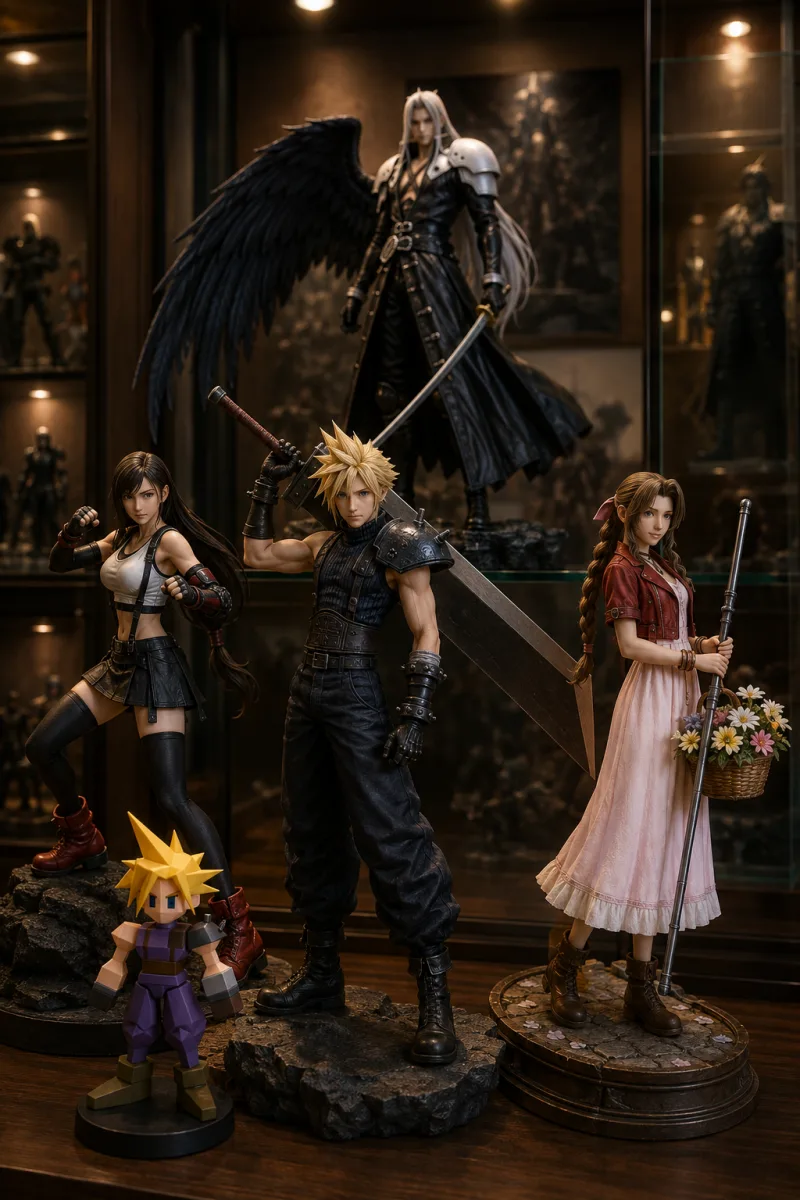
Final Fantasy figures are difficult to compare because the same character can exist in several visual eras at once. A Final Fantasy VII collector may encounter the angular 1997 polygon design, illustration-inspired interpretations, Remake realism, Rebirth costumes and stylised collectible versions. Therefore, the most expensive or technically complicated release is not automatically the most meaningful. The strongest choice preserves the version of the character connected to the memory the collector actually wants to keep.
That distinction matters especially with characters such as Cloud, Tifa, Aerith and Sephiroth. Their faces, costumes, weapons, posture and emotional tone change across games and scenes. As a result, collectors should begin with the game, character era and remembered moment before comparing articulation, sculpting, materials or price.
A figure can reproduce every small costume detail and still feel emotionally wrong when it represents the wrong version. By contrast, a simpler interpretation can become the centre of a collection when its face, pose and clothing immediately recall the scene that matters most.
Begin With the Final Fantasy Memory You Want to Display
Before comparing manufacturers or product formats, decide what the figure should remind you of. Final Fantasy characters carry very different emotional associations depending on the scene.
Cloud may represent guarded determination, a quiet Midgar moment or a major battle. Aerith can evoke warmth, playfulness, flowers or some of the story’s most emotional memories. Meanwhile, Tifa combines physical strength with restraint and loyalty, while Sephiroth usually relies on a colder and more imposing visual presence.
Therefore, the first question should not be “Which figure has the most detail?” Instead, ask which version makes you remember the character immediately.
Choose the Character Before the Product Format
A character-focused collection usually develops more naturally than one built around every available release. One collector may concentrate entirely on Tifa across several costumes, while another may recreate a small group connected to Midgar or Avalanche.
A scene-led collection can remain deliberately selective. Cloud and Aerith may represent one part of the story, while Tifa and Barret create another relationship. Likewise, an original polygon figure can sit at the centre of a nostalgia-focused collection without competing directly with more realistic modern interpretations.
Defining that direction first prevents the collection from becoming a row of technically impressive but emotionally unrelated objects.
Story Era Changes the Character More Than Many Collectors Expect
Final Fantasy VII characters have appeared through very different visual systems. The original game relied on simplified polygonal forms, while later titles introduced increasingly detailed faces, clothing, materials and body language.
Consequently, the same character can feel substantially different between releases. Tifa in her original outfit, Tifa in a Wall Market dress and Tifa during a Rebirth battle sequence represent different aspects of the same personality.
Aerith changes as well. Her familiar dress and braid may remain recognisable, yet facial expression, accessories and scene context can shift the emotional tone of the figure completely.
Therefore, record the exact character version in your collection rather than cataloguing everything under one general name.
Original Polygon Designs Are Not Failed Realism
Original polygon-style Final Fantasy figures deliberately preserve the visual language of the earlier game rather than attempting modern realism.
Their simplified geometry, block-like forms and reduced facial detail work because they reproduce how many players first encountered the characters. In this context, simplicity becomes part of the emotional value rather than a technical weakness.
Therefore, do not compare a polygon figure with a modern Rebirth statue only through paint detail or anatomical complexity. The two products solve different collecting goals.
One preserves the memory of the original game as it first appeared, while the other translates a newer digital character model into a physical object.
Nostalgia Can Be More Important Than Technical Detail
Collectors sometimes assume that newer sculpting automatically creates a better representation. However, nostalgia does not follow technical progress in a straight line.
A simplified figure can trigger a much stronger memory when its silhouette, colours and expression belong to the version played years earlier.
As a result, older visual styles deserve their own place in a Final Fantasy collection rather than being treated as inferior versions of modern realism.
Character Accuracy Begins With the Face
The face usually determines whether a Final Fantasy figure feels convincing. Eye spacing, eyelid shape, mouth position, jawline and hairstyle all contribute to recognition.
Therefore, inspect neutral front and three-quarter photographs before focusing on weapons, effects or elaborate bases.
A dramatic camera angle can make a figure look impressive while hiding an inaccurate eye line or an unfamiliar facial proportion. Neutral lighting also helps reveal whether the expression actually resembles the character.
Hair Carries a Large Part of Final Fantasy Character Identity
Final Fantasy characters often rely heavily on distinctive hairstyles. Cloud’s sharply defined hair, Tifa’s long dark hair, Aerith’s braid and Sephiroth’s long silver hair all create immediate recognition.
For that reason, correct colour alone is not enough. Volume, fringe shape, direction and the way the hair frames the face matter just as much.
Long hair also influences the physical composition. It can create movement, add weight to the rear of the sculpt or interact with clothing and support pieces.
Expression Should Match the Version of the Character
A figure should not simply have a beautiful face. The expression needs to belong to the scene or character interpretation.
Tifa often benefits from restrained confidence rather than an exaggerated expression. Aerith can communicate warmth or playfulness through comparatively subtle facial changes. Cloud may require a more guarded or concentrated expression, depending on the scene.
Therefore, the most dramatic face is not automatically the most accurate one.
Articulation Changes How the Character Is Experienced
An articulated figure gives the collector more influence over the final scene. Cloud can change sword position, Tifa can move between martial-arts poses and Aerith can shift between relaxed and battle-oriented presentation.
However, useful articulation matters more than the number of joints. Shoulder movement, hip construction, ankle stability and hair clearance determine whether the advertised poses actually work.
In addition, hands need to hold weapons and accessories securely. A figure with many interchangeable pieces can become frustrating when the connectors feel loose or the body cannot balance under the added weight.
Movable Eyes Can Add Expression When They Work Naturally
Some premium articulated figures extend customisation beyond ordinary face plates by allowing the eyes to move. This can help the collector direct the gaze toward another character or object in the scene.
However, adjustable eyes only add value when alignment remains natural. Small differences in gaze can quickly make a face feel unfocused.
Square Enix’s listing for its high-end Tifa action figure describes movable eyes, revised joints, alternate hands, a battle face and movable hair. Those features illustrate what collectors should examine in any premium articulated release: not simply how many moving parts exist, but whether they expand character expression.
Hair Clearance Matters on Articulated Figures
Long hair can restrict shoulder, neck and upper-body movement. Tifa and Aerith make this especially important because their hairstyles form a significant part of the character silhouette.
Before buying, inspect how the hair interacts with the shoulders and back during posing. A theoretically flexible neck provides limited value when rigid hair prevents natural movement.
Likewise, repeated rubbing between hair and clothing can create paint wear on some figures.
Hands and Accessories Should Support Recognisable Scenes
Alternate hands are most useful when they create meaningful character actions. Tifa needs hand options that suit martial-arts poses, while Aerith benefits from accessories that connect naturally with her quieter scenes and battle presentation.
Cloud’s sword creates another challenge because its weight can place stress on wrists and shoulders. Therefore, check whether the figure includes suitable gripping hands and whether the weapon needs additional support.
A long accessory list has little value when most pieces cannot create stable or character-appropriate poses.
Static Figures Control One Complete Composition
A fixed figure removes visible articulation and allows the sculptor to control the entire silhouette. Hair, fabric, body position and effect parts can all follow one deliberate movement.
This format works especially well when the collector wants one specific Final Fantasy moment rather than continual pose changes.
The official Tifa Rebirth statuette, for example, builds its composition around a limit-break moment. In that type of figure, the pose, expression and surrounding effects work as one scene rather than separate adjustable elements.
A Strong Static Pose Needs a Clear Visual Direction
Even an elaborate statue can feel confused when the body, hair and effects pull attention in unrelated directions.
Therefore, examine the figure’s overall flow. Tifa’s movement should lead naturally through the torso, arms and legs, while an Aerith composition may rely more strongly on posture, dress movement and accessory placement.
The strongest statues make the viewer understand the intended moment immediately.
Effect Parts Should Support the Character Rather Than Hide It
Transparent waves, impact effects, magical energy and environmental pieces can add movement to a Final Fantasy figure. However, large effects can also become the most visually dominant part of the product.
Therefore, ask whether the effects reinforce the character or distract from the face and pose.
Transparent parts also deserve careful inspection because scratches, clouding and visible connection points can become more obvious under display lighting.
Tifa and Aerith Require Different Sculpting Priorities
Tifa and Aerith may belong to the same story, but successful figures should not approach them as interchangeable character designs.
Tifa combines strength, long dark hair, gloves, boots and a comparatively restrained emotional expression. Her body language often needs grounded balance and controlled physical confidence.
Aerith relies more strongly on the shape of her hair, braid, dress structure and a face that can communicate warmth, playfulness or sadness without excessive exaggeration.
Therefore, each character needs a different balance between face, clothing and posture.
A Tifa Figure Needs More Than Body Proportions
Tifa’s physical design attracts attention, but body proportions alone cannot preserve the character. Her face, long hair, clothing and controlled expression remain essential.
A sculpt can reproduce her silhouette accurately yet still feel generic when the face becomes too glamorous or loses the emotional restraint associated with the character.
Therefore, inspect facial identity before concentrating on curves or costume details.
Tifa’s Clothing Helps Define the Character
Gloves, boots, skirt, stockings and upper-body clothing form an immediately recognisable visual combination in many Tifa interpretations.
However, alternate outfits can create equally meaningful figures when they belong to a specific scene.
Collectors should therefore distinguish between a classic character presentation and a story-specific alternate costume instead of comparing them as though they serve the same purpose.
Compare Tifa’s Expression With the Intended Scene
A battle-oriented Tifa can use more tension in the eyes and posture, while a quieter presentation may benefit from a softer expression.
This difference matters because an expression that works in one scene can feel disconnected in another.
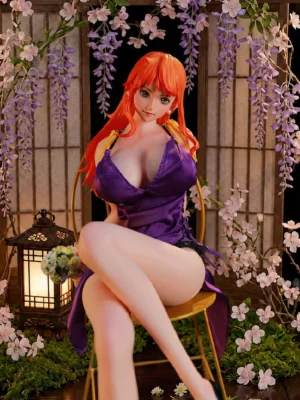
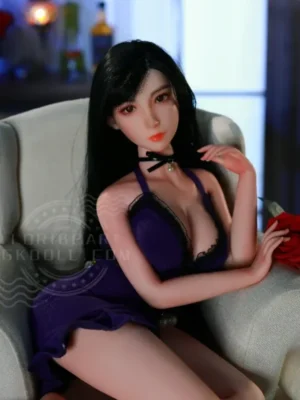
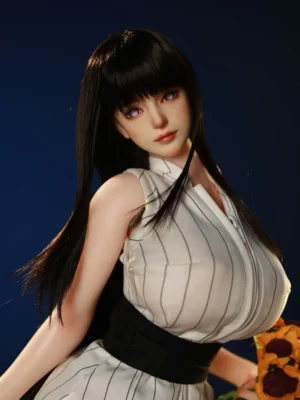
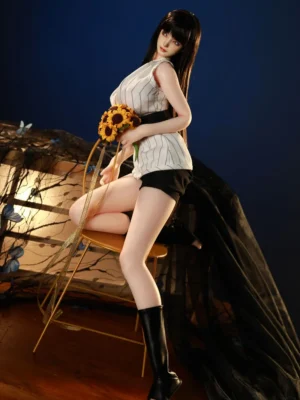
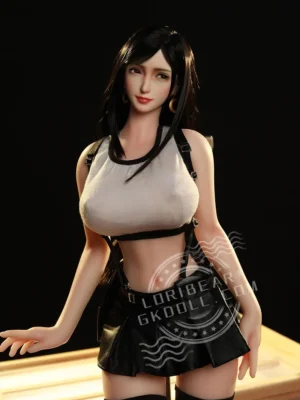
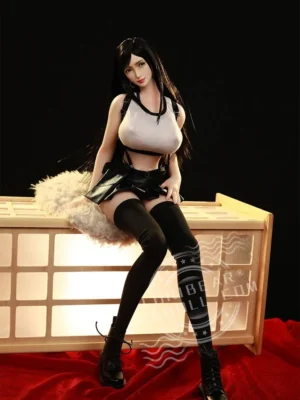
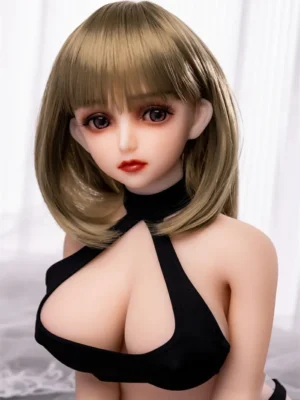
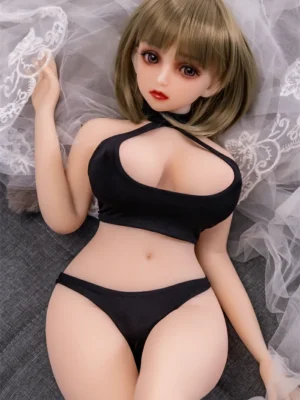
Collectors interested in a character-focused adult interpretation can also examine the 80cm Tifa Lockhart figure, where facial identity, hairstyle, body styling and clothing become the primary focus rather than battle effects.
Aerith Depends Strongly on Facial Softness
Aerith’s character can be weakened when a sculpt makes the face too severe or generic. Eye shape, mouth, braid and hair volume all influence whether the figure retains her recognisable warmth.
Therefore, neutral close photographs matter more than heavily edited promotional angles.
Her costume should also support the same personality. Dress structure, accessories and posture often contribute more to recognition than dramatic body exaggeration.
Aerith’s Hair and Dress Need to Work Together
The hairstyle and dress create a large portion of Aerith’s silhouette. If either becomes too rigid or oversized, the figure can lose the balance associated with the character.
Inspect how the braid follows the back and how the dress moves around the body. A good sculpt keeps these details readable without making them look disconnected from the pose.
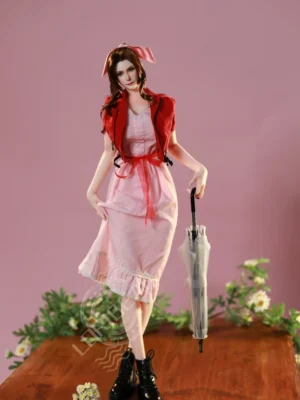
The 68cm Aerith figure provides another character-focused interpretation in which her facial styling, hairstyle and softer visual identity remain central to the presentation.
Cloud Requires Strong Silhouette Recognition
Cloud can often be recognised from the hairstyle and Buster Sword before the viewer sees small facial details. Therefore, those elements need accurate proportion and placement.
The sword should feel substantial without overwhelming the entire body. Likewise, the stance should communicate controlled strength rather than simply placing the largest weapon possible beside the character.
For articulated figures, wrist and shoulder stability become particularly important because the weapon can create significant leverage.
Sephiroth Needs Controlled Visual Drama
Sephiroth naturally creates a more dramatic silhouette through long hair, dark clothing and an extended sword. However, these elements can easily overwhelm a display.
Therefore, the strongest Sephiroth figures control coat movement, hair direction and weapon placement rather than allowing every component to compete for attention.
Facial expression should remain cold and deliberate instead of becoming generically aggressive.
Costume Accuracy Should Follow the Chosen Story Moment
Wall Market dresses, beach outfits, battle clothing and everyday designs belong to specific moments. Consequently, the costume should be evaluated according to the version the figure claims to represent.
The official Square Enix store separates these versions through specific product names. Collectors can use the same discipline when recording their own collections.
This avoids confusing two visually different versions simply because they share the same character name.
Materials Affect Both Detail and Handling
Rigid plastics and resin allow manufacturers to create controlled clothing folds, sharp hair strands and detailed accessories. Meanwhile, articulated products may combine different rigid materials to balance appearance and mechanical strength.
Character-focused adult figures can use softer materials, which creates a different collecting experience centred more strongly on clothing, body presentation and tactile construction.
Therefore, buyers should compare materials according to the intended product format rather than assuming one material is universally better.
Paint Quality Is Especially Important Around the Face
Eye alignment, eyebrows, lips and hairline paint determine much of the final expression.
Therefore, inspect the face closely before focusing on less visible details. A small error around the eyes can change the character much more than a minor paint mark on the base.
Skin tone should also remain visually coherent across separate parts.
Metallic and Fabric Finishes Should Look Different
Weapons, leather-like clothing, fabric and skin should not all reflect light in the same way.
Controlled differences in gloss help separate these materials visually. By contrast, an evenly shiny figure can appear artificial even when the sculpt itself is strong.
Do Not Compare Figures Only by Detail Count
More folds, accessories and effect pieces do not automatically create a better character representation.
A simpler figure can feel more accurate when the face, hairstyle and posture communicate the character immediately.
Therefore, detail should support identity rather than become the main collecting goal.
Build a Collection by Contrast, Not Quantity
One highly articulated battle figure beside one quieter static figure can tell more story than several near-identical versions of the same character.
Contrast can come from pose, expression, colour and character relationship.
For example, a tense Cloud display can sit beside a calmer Aerith presentation, while a dynamic Tifa figure can provide movement without requiring every neighbouring character to use equally dramatic effects.
Group Characters by Story Relationship
Characters can become more meaningful when the display reflects their relationships rather than simply arranging them by purchase date.
Cloud, Tifa and Aerith naturally create one visual story, while Avalanche-focused displays can use different relationships and emotional cues.
Therefore, ask what each new figure contributes to the existing collection before buying another variation.
Stylised and Realistic Figures Can Coexist
Polygon figures, miniatures and realistic statues do not need to compete when the display makes their different purposes clear.
One shelf can concentrate on nostalgia, while another focuses on modern realism. Alternatively, collectors can separate highly stylised figures visually with spacing or different display levels.
This makes variation look intentional rather than inconsistent.
Display Lighting Should Prioritise Faces
Soft light from slightly above and in front can reveal facial expression, hair texture and costume detail without creating harsh shadows.
Transparent effects may benefit from additional backlighting, but the face should remain readable.
Therefore, avoid letting bright effect lighting become more visually dominant than the character.
Protect Figures From Direct Sunlight and Heat
Long-term light and heat exposure can affect plastics, paint and other materials. Therefore, avoid permanent display beside bright windows, radiators or concentrated hot lighting.
A stable indoor environment usually provides a better balance between visibility and preservation.
Dust Figures Without Pulling Delicate Parts
Dust gathers around hair, clothing folds and effect components. Regular light cleaning can prevent heavy buildup.
Use a soft brush and support thin parts rather than pulling on hair, weapons or accessories.
For complicated statues, removing detachable pieces first may make cleaning safer when the manufacturer allows it.
Second-Hand Final Fantasy Figures Need Careful Inspection
Used figures can provide access to discontinued releases, but the actual condition matters more than original promotional photography.
Ask for clear photographs of the face, hair, base, joints and included accessories. In addition, inspect weapon connections and transparent effect pieces for cracks or clouding.
Sun exposure may fade one side of a figure, while long-term display can loosen articulated joints.
Check the Complete Accessory Set
Alternate faces, hands, weapons, support pieces and adapters disappear easily on second-hand releases.
Therefore, compare the seller’s photographs with the original contents list.
A missing small connector can prevent several major accessories from working correctly.
Authenticity and Condition Are Different Questions
An authentic figure can still arrive damaged, faded or incomplete. Likewise, perfect packaging does not guarantee perfect paint or articulation.
Therefore, check product identity and physical condition separately.
Seller history, packaging, sculpt consistency and markings can help identify a release, while close photographs reveal its current condition.
Keep an Inventory of Character Versions
Final Fantasy characters often receive many releases, so a simple inventory helps prevent confusion.
Record the character, game, costume, product line and important accessories rather than saving only the general character name.
This also makes it easier to identify which version is missing from a themed collection.
Use Existing Guides to Compare Wider Figure Formats
The Anime Doll Brands & Series pillar connects Final Fantasy with other character collections and helps organise different franchises.
Meanwhile, broader material and format choices are explained in the anime figures overview.
From Game Memory to a More Personal Character Presence
Some Final Fantasy collectors become most attached to the face, clothing and emotional identity of a character rather than the traditional statue format itself.
Tifa and Aerith are especially suited to this type of collecting because their hairstyles, expressions and clothing create strong recognition even outside a battle scene.
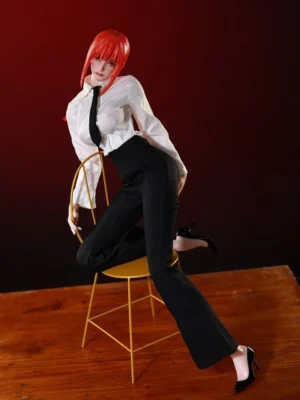
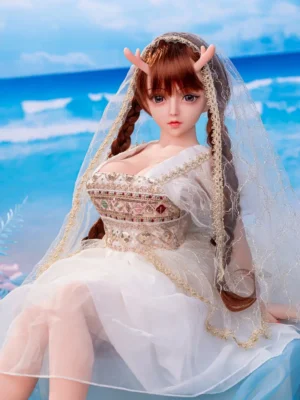
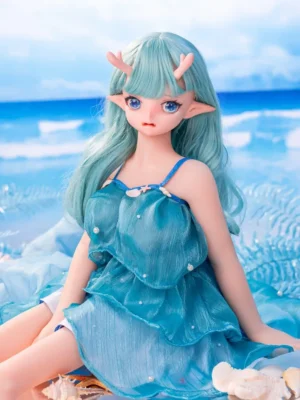
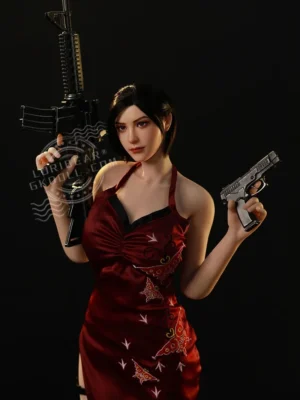
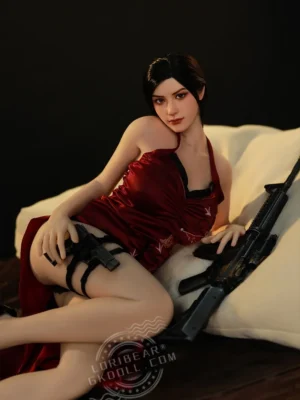
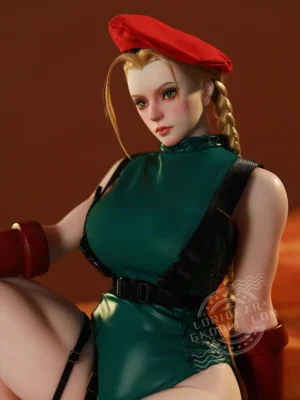
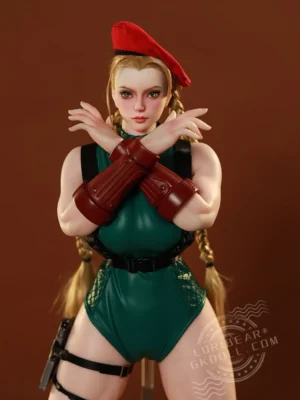
The LORIBEAR Final Fantasy collection develops that character-focused interest through adult interpretations where facial identity, body design, clothing and styling become central to the presentation.
These products create a different experience from a rigid statue or articulated action figure. Therefore, character accuracy, material, clothing and care should be considered together rather than judged according to conventional figure criteria alone.
Final Fantasy Figure Buying Checklist
- Choose the exact character before comparing prices.
- Identify the game, story period and costume version.
- Decide whether nostalgia, battle presentation or character portrait matters most.
- Inspect neutral front and three-quarter facial views.
- Compare hairstyle and expression with the intended version.
- Check costume details and signature accessories.
- For articulated figures, inspect useful joint range rather than joint count.
- Check whether hair blocks important movement.
- Confirm every included hand, face, weapon and adapter.
- For static figures, inspect composition and support points.
- Check transparent effects for clear connections and potential fragility.
- Inspect paint alignment around eyes and costume boundaries.
- For second-hand purchases, request photographs of the actual item.
- Compare authenticity and physical condition separately.
- Build the collection around character relationships or visual themes.
- Protect figures from prolonged direct sunlight and excessive heat.
Final Fantasy Collecting Questions
Should collectors choose the game or the character first?
Choose the exact character era and scene first because costumes, expressions and visual styles can change significantly between games, remakes and individual story moments.
Are polygon figures less collectible than realistic figures?
No. Polygon designs preserve the original game’s visual identity and serve a different nostalgic purpose. Their value comes from recognisable historical style rather than modern realism.
What matters most in an articulated Tifa figure?
Useful joint movement, stable balance, hair clearance, expressive faces and hands that support character-appropriate poses matter more than the total number of joints.
What should I check when buying an Aerith figure?
Focus on facial softness, hairstyle, braid, dress construction, posture and the exact story version. These features usually carry more character identity than elaborate effects.
Why can two Tifa figures look completely different?
They may represent different games, costumes, scenes or artistic goals. Facial interpretation, hair, clothing and pose can all change while the character remains Tifa.
Are static Final Fantasy figures better than action figures?
Neither format is universally better. Static figures provide cleaner fixed composition, while articulated figures allow changing poses, expressions and accessories.
Can different Final Fantasy figure lines share one display?
Yes. Group them by character relationship, visual style or story theme so stylised and realistic interpretations feel deliberately arranged rather than randomly mixed.
How should transparent effect parts be protected?
Keep them away from unnecessary contact, direct sunlight and excessive heat. Support them carefully during cleaning and inspect connection points before moving the figure.
Official Reference Listings
- Square Enix Store: Rebirth Tifa articulated figure specifications
- Square Enix Store: original polygon Aerith figure
Related series routes are available through the Collector Guides.
Explore Final Fantasy Character Dolls at LORIBEAR
For collectors who also value recognisable faces, hairstyles, body presentation and costume styling, the LORIBEAR shop offers anime- and game-inspired sex dolls built around character identity and detailed visual presentation.
The current collection includes TPE, silicone and mixed-material configurations across different character designs. Final Fantasy collectors can compare Tifa, Aerith and other available character-focused interpretations while considering facial styling, hair, clothing and material preferences.
Browse the LORIBEAR collection to compare the available characters, materials and designs and find the model that best matches the Final Fantasy character presence you want to bring into your collection.