Anime Blu-ray UK: Editions, Regions and Collector Checks

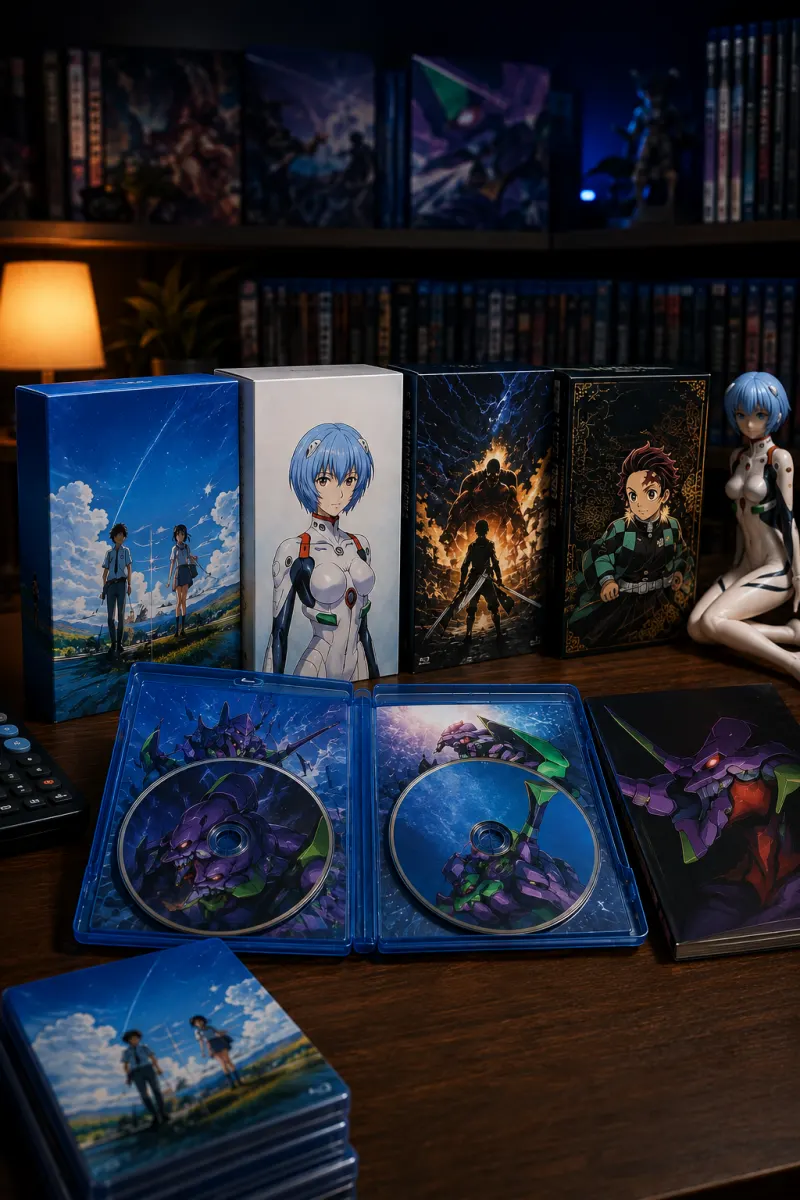
An anime Blu-ray UK purchase is not defined only by the title printed on the cover. The same series may appear as a standard edition, collector’s box, steelbook, film compilation or imported release. Each version can contain different subtitles, audio tracks, episode counts, bonus material and region restrictions.
The right edition is therefore the one that works with your player and contains the version of the story you actually want. Attractive artwork matters, but it should come after playback compatibility and content.
Physical media still has a particular appeal for anime collectors. A disc gives you a fixed release that does not disappear when a streaming catalogue changes. Collector editions can also preserve artwork, booklets, interviews, soundtrack material and alternative cuts. Those advantages disappear quickly if the disc will not play or the set leaves part of the story missing.
Confirm the Format Before Choosing the Artwork
Anime releases often use similar cover designs across DVD, Blu-ray and 4K editions. Check the format printed on the case before comparing artwork or special packaging.
| Format | Main advantage | Check before buying |
|---|---|---|
| Blu-ray | High-definition picture and larger disc capacity | Region, player support and included discs |
| 4K Ultra HD Blu-ray | Higher resolution and possible HDR presentation | 4K player, display capability and whether Blu-ray is also included |
| DVD | Wide hardware compatibility and often lower cost | PAL/NTSC handling, region and picture quality |
| Collector’s edition | Books, art cards, soundtrack or premium packaging | Exact contents and whether the extras justify storage space |
A premium box does not automatically contain the best video presentation. Some collector editions package the same discs as a standard release and add physical extras around them.
For that reason, separate the disc specification from the packaging. Decide first whether you want Blu-ray, 4K or DVD. Then compare the extras and presentation.
UK Buyers Need to Check Blu-ray Regions Carefully
Region compatibility remains one of the most important checks for imported anime. A disc can be completely genuine and still fail to play on the equipment in your home.
Sony’s UK support information places Europe in Blu-ray Region B. It also explains that ordinary Blu-ray players do not normally allow users to change the player region whenever they want.
Japanese standard Blu-rays are commonly associated with Region A. However, some individual releases may work across several regions or carry no regional restriction. The safest approach is to check the exact release rather than treating every Japanese disc the same way.
Do Not Judge Region Compatibility From Language
Japanese artwork or Japanese text on a case does not tell you whether the disc will play in a UK machine.
Likewise, an English-language listing does not guarantee Region B compatibility. Marketplace sellers sometimes copy titles and descriptions from another edition.
Look for the region information on the packaging, publisher specification or reliable listing for that exact release.
4K and Standard Blu-ray Discs in the Same Box May Behave Differently
Ultra HD Blu-ray and standard Blu-ray should be checked separately when both formats appear in one set.
A 4K edition may include the main film on Ultra HD Blu-ray while placing interviews, bonus features or another version on a standard Blu-ray disc.
That means a collector should not assume every disc inside the box follows the same playback rules.
Before importing an expensive edition, check the complete disc list and identify which format contains the material you care about.
A Computer Drive Does Not Automatically Solve Region Problems
Using a computer does not guarantee that an imported Blu-ray will play. The drive, operating system and playback software all affect compatibility.
Some computer drives also retain region settings. Therefore, do not buy an incompatible release on the assumption that a laptop will bypass the problem.
If your collection contains imports from several territories, confirm how your specific hardware handles them before building the collection around imported editions.
Episode Count Can Reveal an Incomplete Set
A low-priced box set can look like a bargain until you notice that it contains only half a season.
Labels such as Part 1, Part 2, Collection 1 or Volume 2 are easy to miss in small marketplace photographs. Always compare the episode numbers on the case with the complete season.
For longer anime, note the season, story arc and disc count before searching. This makes partial releases much easier to identify.
Films, OVAs and Specials May Sit Outside the Main Box
A television series can feel incomplete even when every numbered episode appears in the set.
OVAs, recap films, theatrical releases and specials may have separate physical editions. Some add important character moments, while others simply retell existing material.
Check how those releases fit into the story before deciding whether they belong in your collection.
Do Not Assume a “Complete Collection” Contains Every Related Release
“Complete” usually refers to the specific television season or series named on the package. It may not include films, spin-offs or later bonus episodes.
Read the episode range and runtime rather than relying on the word itself.
This matters especially when two editions use almost identical artwork but contain different numbers of discs.
Audio and Subtitles Need Separate Checks
Japanese audio, English dubbing and English subtitles are three separate specifications.
A release may include Japanese audio with English subtitles but no English dub. Another edition may offer both languages yet handle captions differently.
Imported Japanese editions can also omit English completely. Therefore, never assume that a famous series automatically includes the language options found on a UK release.
Subtitle Style Can Change the Viewing Experience
Collectors who care about translation may want to compare editions more closely.
Names, honourifics, signs and cultural references can receive different treatment. Song lyrics and on-screen text may also appear differently between releases.
If these details matter to you, look for subtitle screenshots or trusted reviews of the specific edition before buying.
Check Whether Subtitles Are Optional
Some releases tie subtitles to a particular audio track. Others allow more flexible combinations.
This matters when you prefer Japanese audio but occasionally want subtitles off, or when you want captions while using the English track.
Menus and subtitle controls rarely appear clearly in product photographs, so release-specific reviews can become useful for these details.
Ratings and Runtime Help Identify the Intended Release
UK packaging normally displays a BBFC age classification. An imported edition may show another territory’s rating instead.
A different rating does not automatically signal a problem. It does, however, tell you that the release may come from another market and deserves closer checking.
Runtime can reveal differences too. Films sometimes appear in theatrical, extended or compilation versions. Compare the stated runtime and edition name when more than one cut exists.
A Missing UK Rating Does Not Prove a Disc Is Counterfeit
Imported anime can carry legitimate packaging from its original territory without displaying a BBFC mark.
Instead of judging authenticity from the rating alone, check the publisher, catalogue number, region, language options and disc contents together.
The more expensive the edition, the more useful these details become.
Collector Packaging Needs Its Own Condition Check
Physical anime collecting often extends beyond the discs themselves. Rigid boxes, steelbooks, art books and slipcovers can become part of the reason to own a particular edition.
Ask for clear photographs of corners, spines, disc hubs and outer sleeves when buying used. Cardboard boxes show compression and sun fading more easily than standard plastic cases.
Steelbooks need another type of inspection. Small dents and scratches can become obvious under direct light even when marketplace photographs make the case look clean.
Loose Discs Can Damage Themselves During Shipping
A disc that has come free from its hub can move around inside the case during transit.
Ask the seller to check for loose-disc noise before shipping when the edition has a fragile hub or has already been opened.
For expensive collector sets, photographs of the inner tray also help confirm that every disc sits correctly.
“Complete” Should Include the Physical Extras Too
Collector editions often include art cards, posters, books, soundtracks or other items that sellers remove from the box.
A listing described as complete should therefore match the original contents of that edition, not merely contain all video discs.
Compare the seller’s photographs with official product images before paying a premium for a collector release.
Used Anime Blu-rays Need a Different Inspection From Sealed Copies
A used disc can provide excellent value when the owner handled it carefully. Condition should still be divided into several parts.
Inspect the playback surface, case, artwork and collector extras separately. A worn outer box does not necessarily mean the disc itself is damaged.
Likewise, a clean case cannot prove that the disc has no scratches.
When buying online, ask the seller to describe any marks that do not appear clearly in photographs.
Sealed Copies Preserve Condition but Hide Some Problems
Collectors sometimes prefer a sealed edition because the packaging remains untouched. That makes sense when the sealed state itself has value.
However, sealing prevents direct inspection of the disc hubs and internal contents.
If the package produces obvious loose-disc noise or shows impact damage, discuss it with the seller before the return period ends.
Store Blu-rays to Protect Both Discs and Artwork
Keep cases upright so heavy box sets do not compress one another. Direct sunlight can fade spines even when the discs remain unaffected.
High heat can also distort plastic cases and damage premium packaging over time.
If the artwork matters as much as playback, think of the shelf as storage rather than decoration alone. Leave enough space to remove a box without scraping the neighbouring spine.
A Blu-ray Shelf Can Become a Record of the Anime You Care About
Over time, a physical anime collection becomes more personal than a list of titles. The spines show which stories you chose to keep even after streaming access stopped mattering.
Collector editions deepen that connection through artwork, books and physical objects associated with the series. A favourite character can eventually become just as important as the disc itself.
Evangelion is a good example. A Blu-ray keeps the story available on the screen, but Rei Ayanami can also become part of the room beyond that screen. Placing the LORIBEAR Rei Ayanami figure near an Evangelion collection changes the shelf from a row of releases into a character-led display.
The figure’s two facial designs and two outfits let the presentation change while the connection to Evangelion remains clear. Instead of treating the Blu-ray and figure as unrelated purchases, the physical media provides the story while Rei gives that story a visible presence in the room.
A collector can build the display gradually. Start with the preferred Evangelion edition, add the art book or soundtrack that belongs with it, then position Rei beside the collection so the character becomes the visual centre of that part of the shelf.
This approach works particularly well when physical media already matters to you. The point is no longer simply to own another object. The disc, artwork and character begin to reinforce the same anime memory.
Let the Collection Move Beyond the Disc Case
The Anime Figures & Collectibles reference explores other physical ways to collect anime beyond Blu-rays, including figures and character-focused display pieces.
The LORIBEAR shop brings anime- and game-inspired character designs into that same collecting space, allowing a physical media shelf to grow into a room where the characters themselves become part of the display.
UK Anime Disc Questions
Will a Japanese Blu-ray play on a UK player?
Not automatically. UK Blu-ray equipment normally uses Region B, while many Japanese standard Blu-rays use Region A. Check the exact release before ordering.
Are 4K anime discs region-free?
Ultra HD Blu-ray discs generally use different region handling from standard Blu-ray. However, standard Blu-ray bonus discs inside the same package may still carry regional restrictions.
How can I tell whether a box set contains the complete season?
Check the episode numbers, disc count and wording on the case. Labels such as Part 1 or Collection 1 can indicate that another set is required.
Why is one anime box set much cheaper than another?
The cheaper edition may contain fewer episodes, use standard packaging or omit collector extras. It may also be a reissue or used copy. Compare contents rather than price alone.
Does Blu-ray always include an English dub?
No. Audio and subtitle options vary between territories and editions. Confirm Japanese audio, English dubbing and English subtitles separately.
Can a UK Blu-ray player play imported anime?
It depends on the disc region and the player. Some releases may work across multiple regions, but compatibility should be checked for the exact disc.
Should sealed anime discs be opened for inspection?
A sealed copy preserves collector condition, so opening it depends on your collecting goal. If the case sounds as though a disc is loose or the package has visible impact damage, contact the seller while return options remain available.
What should I check when buying a used collector’s edition?
Inspect the discs, case, outer box and physical extras separately. Compare the included items with official photographs so missing art cards, books or soundtrack discs do not go unnoticed.
Playback Reference
Sony UK’s Blu-ray region explanation identifies Region B for Europe and explains how Blu-ray and Ultra HD Blu-ray region handling differs.