Power Anime: Who Is the Blood Fiend in Chainsaw Man?

Power anime is closely connected with Chainsaw Man, where the horned Blood Fiend joins Denji and Aki as a Public Safety Devil Hunter. She enters their lives as a loud, selfish and almost uncontrollable troublemaker, but the relationships inside that small household gradually reveal fear, loyalty and genuine attachment beneath her chaotic personality.
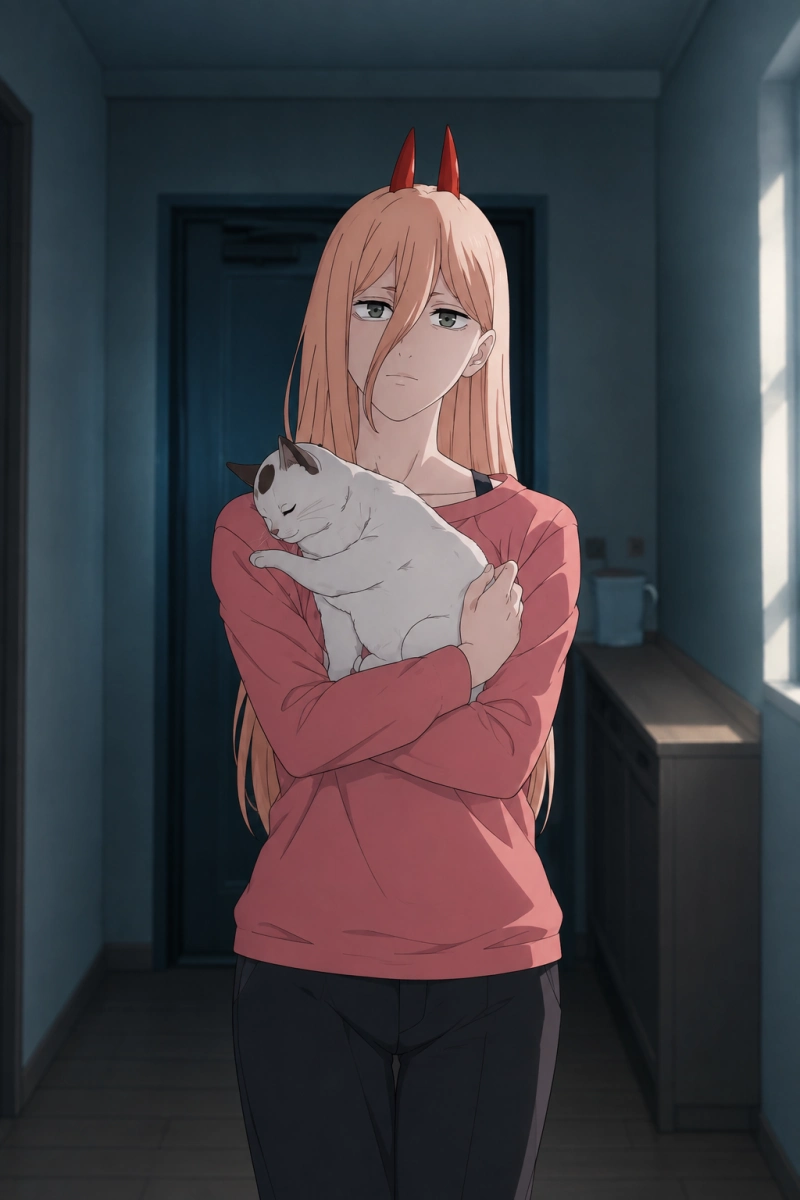
Power attracts attention before she begins to speak. Her red horns, long pale hair, cross-shaped pupils, sharp teeth and fearless expression create an unmistakable appearance. Once she opens her mouth, exaggerated claims and shameless lies make the character even harder to ignore.
Yet Power is not memorable simply because she behaves badly. Her emotional development transforms an apparently selfish Fiend into someone capable of trust and sacrifice. Chainsaw Man allows that change to happen without removing the arrogance, humour and unpredictability that define her.
Power Is the Blood Fiend in Chainsaw Man
A Fiend forms when a Devil takes control of a human corpse. The resulting being keeps a human-shaped body but develops visible characteristics associated with the Devil inside it.
Power carries the Blood Devil within a human body, making her the Blood Fiend. Her horns and unusual eyes immediately reveal that she is not an ordinary woman, even when she wears the familiar shirt, tie and jacket used by Public Safety.
A Fiend normally possesses less strength than the Devil’s original form. Power can still manipulate blood and create weapons, although her human body restricts the full potential of the Blood Devil.
The official VIZ Chainsaw Man page provides the original manga volumes that follow Power, Denji, Makima, Aki and the other Public Safety characters.
Why Power Initially Struggles With Human Life
Power understands hunger, fear and survival far better than responsibility or social rules. She avoids household chores, lies whenever the truth becomes inconvenient and expects other people to accept her version of events.
Her confidence often exceeds her actual courage. Power declares herself superior when she feels safe, then quickly looks for an escape when an enemy proves overwhelmingly dangerous.
This behaviour creates comedy because she treats every minor disagreement as an attack on her greatness. Food, bathing, cleaning and ownership can all become reasons for an argument.
Behind the humour, however, sits a character who has never learned how ordinary human relationships work. Power does not begin with a clear understanding of trust. She discovers it through Meowy, Denji and Aki.
Meowy Reveals Power’s Ability to Love
Power’s relationship with her cat Meowy provides the first clear sign that she can care about another living being. Until that point, her selfish behaviour makes loyalty seem almost impossible.
Meowy changes her priorities. Power accepts danger and humiliation because losing the cat matters more than protecting her pride. Her usual boasting disappears when she believes Meowy may die.
This attachment also creates a connection with Denji. He understands what it means to depend on a nonhuman companion because Pochita once filled the same emotional role in his life.
Saving Meowy does not suddenly make Power considerate or honest. Instead, the experience proves that affection already exists beneath her survival instincts. Later relationships gradually expand that capacity.
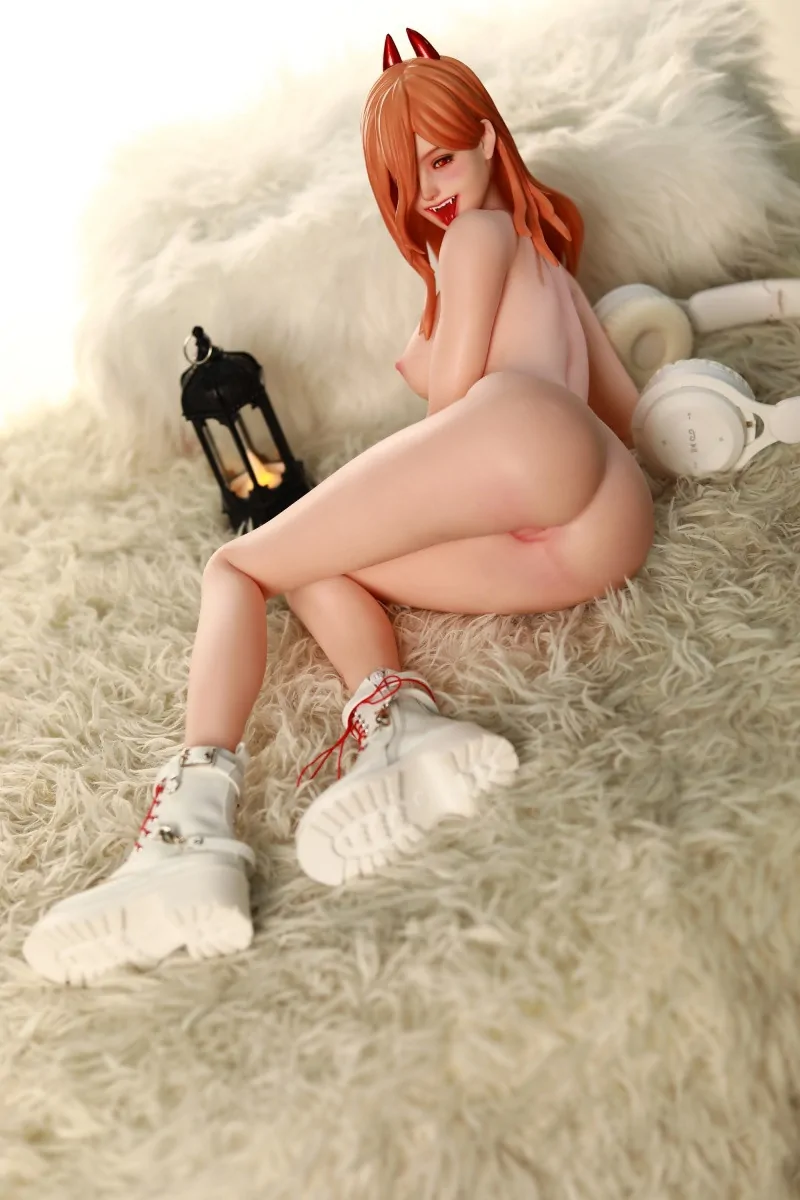 Her Horns and Eyes Define the Power Anime Design
Small red horns rise from the top of Power’s head and remain visible above her pale hair. Their shape makes her easy to identify in both quiet domestic scenes and violent battles.
The horns can grow when the amount of blood inside her body increases. This connection gives the feature a purpose beyond decoration and visually links Power to her Blood Devil identity.
Her yellow and red eyes contain distinctive cross-shaped pupils. They create a gaze that can look playful, arrogant or predatory depending on the surrounding expression.
Sharp teeth complete the face. A wide smile immediately communicates wild energy, while an open-mouthed shout matches her habit of turning every opinion into a dramatic declaration.
A restrained face may look attractive, but it cannot capture Power by itself. Her expression needs enough confidence and instability to suggest that another argument, boast or reckless decision may begin at any moment.
Long Pale Hair Makes Her Movement More Expressive
Power’s long pale-blonde hair softens the supernatural features around her face. It falls past the shoulders and moves visibly when she runs, fights or throws her body into an exaggerated reaction.
The loose hairstyle reflects her personality. Makima’s carefully arranged braid communicates control, while Power’s longer and less disciplined hair supports a more chaotic presence.
Different poses can change its effect. Hair resting around the shoulders creates a calmer appearance, while strands moving away from the face make Power look energetic and ready to attack.
The combination of pale hair and red horns also creates a strong colour contrast. Even without her familiar clothing, those two features preserve much of the character’s identity.
Power Uses Blood to Create Physical Weapons
Power can manipulate blood and harden it into weapons. She frequently creates a large hammer, although her ability can form other shapes when the situation requires them.
This power matches her direct approach to combat. She does not naturally prefer careful planning or prolonged observation. Power forms a weapon, rushes towards the target and tries to overwhelm it through force.
The blood weapons also strengthen her visual theme. Their red colour connects with her horns, eyes and violent energy, making each attack feel like an extension of the same character.
However, using blood consumes a resource from her body. Excessive use can weaken her, and Public Safety manages her blood level when it becomes too high.
Power therefore possesses dangerous abilities without becoming invincible. Her limitations create situations in which confidence, fear and actual strength collide.
Confidence and Cowardice Exist at the Same Time
Power talks as though no opponent could defeat her. She takes credit for victories, rewrites failures and often claims that events happened exactly as she intended.
Real danger exposes another side. When Power recognises that an enemy can easily kill her, pride may disappear beneath immediate fear.
This contradiction makes her more entertaining than a completely fearless fighter. Every boast creates uncertainty because her reaction may change as soon as the situation becomes serious.
Cowardice also gives her later courage greater meaning. Power does not act bravely because fear has vanished. She sometimes acts while understanding exactly how terrified she feels.
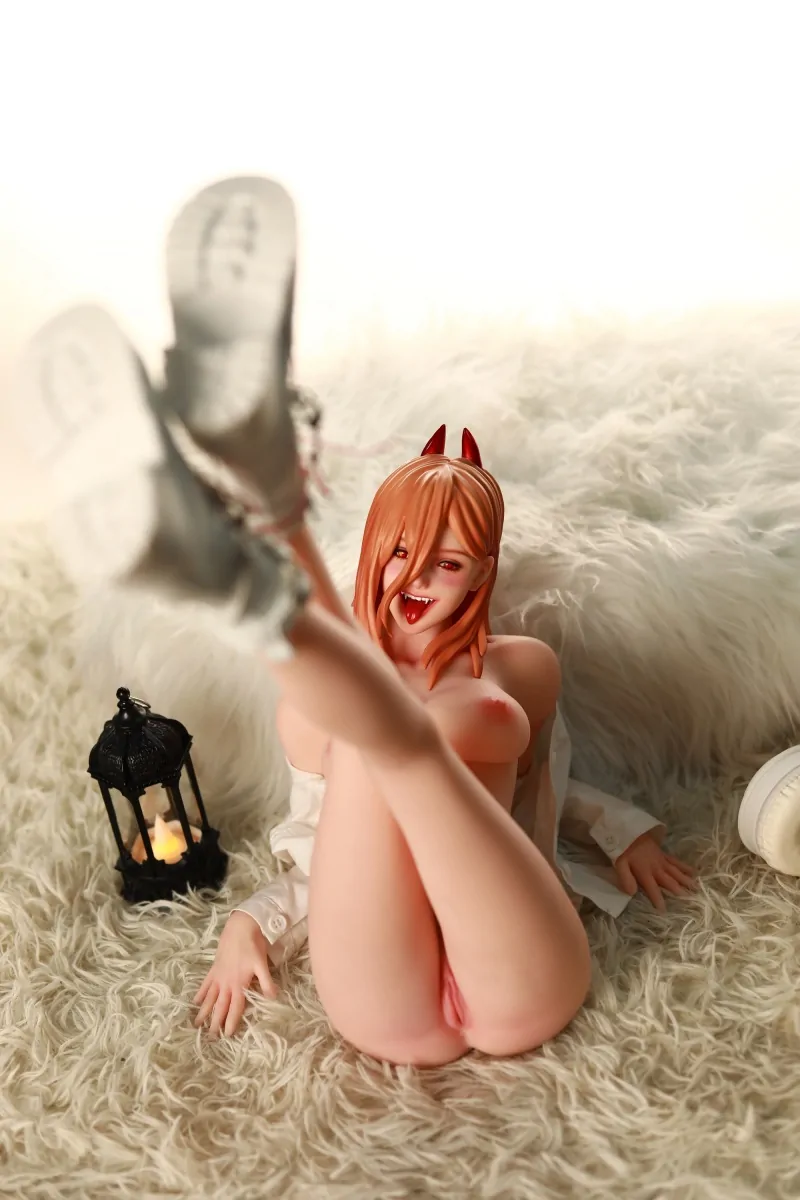 Power and Denji Develop a Sibling-Like Relationship
Denji initially approaches Power with physical expectations. Their connection changes once they begin sharing a home, daily routines and responsibility for Meowy.
Both characters are selfish, impulsive and unfamiliar with normal domestic life. They steal food, avoid chores, start arguments and regularly leave Aki to repair the consequences.
Instead of becoming a conventional romance, the relationship begins to resemble an unruly brother and sister. Their closeness grows through shared meals, fights, boredom and repeated experiences of surviving danger together.
This development teaches Denji that intimacy does not always need to become sexual. At the same time, Power learns that another person can remain close without controlling or abandoning her.
Their lack of ordinary boundaries produces comedy during peaceful moments. Later events transform that comfort into one of the story’s most important emotional connections.
Aki Gives Denji and Power a Home
Aki begins as the responsible member of the household. He cooks, maintains order and tries to prevent Denji and Power from destroying every routine around them.
At first, the arrangement appears temporary. Public Safety has placed three incompatible people under one roof, and none of them knows how to behave like a family.
Ordinary repetition gradually changes that situation. Meals, cleaning, arguments and quiet evenings create a shared life that no formal declaration could establish as naturally.
Aki becomes protective of both Denji and Power. In return, they begin depending on the stability he provides, even when they refuse to admit it.
This domestic bond gives later violence greater emotional force. Chainsaw Man does not only threaten three devil hunters. It threatens the strange family they created together.
Fear Exposes Power’s Vulnerable Side
Power’s loud confidence can make her appear emotionally untouchable. Traumatic experiences reveal how quickly terror can damage that public image.
After facing overwhelming fear, she becomes dependent and struggles to complete ordinary tasks alone. The woman who normally demands attention now needs reassurance and physical closeness to feel safe.
Denji stays with her through those moments. He helps without using her vulnerability to obtain the reward or sexual fantasy he might once have expected.
The scenes create a different kind of intimacy. Power no longer needs to boast, entertain or prove that she is stronger than everyone around her. She can simply trust another person while she recovers.
That trust gives the relationship more depth than a straightforward attraction. Power allows Denji to see the frightened person hidden beneath the Blood Fiend’s exaggerated confidence.
Why Power Remains Likeable Despite Her Behaviour
Power lies, cheats and creates unnecessary problems, but the story does not pretend that these habits are admirable. Denji, Aki and other characters respond with irritation, anger or disbelief.
Consequences keep the humour effective. Power makes an outrageous claim, expects immediate agreement and then changes her account when events prove her wrong.
Her emotional growth also remains imperfect. Forming a bond with Denji does not suddenly make her polite. Living with Aki does not inspire a permanent respect for household rules.
Instead, acts of loyalty begin appearing beside the familiar selfishness. Power becomes capable of protecting someone else while remaining loud, greedy and unpredictable.
This uneven development feels natural for her. Complete behavioural reform would remove the qualities that made Power entertaining in the first place.
Power, Makima and Reze Create Different Character Moods
| Character | Visible personality | Emotional attraction |
|---|---|---|
| Power | Loud, impulsive and openly selfish | Chaotic energy, humour and unexpected loyalty |
| Makima | Calm, polite and emotionally controlled | Authority, mystery and the desire to gain her approval |
| Reze | Friendly, gentle and apparently approachable | Romantic warmth complicated by concealed danger |
Power fills a scene with visible emotion. Her face and voice quickly reveal excitement, irritation, fear or exaggerated pride.
Makima creates the opposite atmosphere. She controls her expression so carefully that people around her struggle to understand what she wants. Reze initially appears warmer, although the secret behind her identity changes the meaning of that kindness.
Power suits people who prefer an expressive and unpredictable woman. Her attraction comes from disorder rather than distant control or carefully hidden danger.
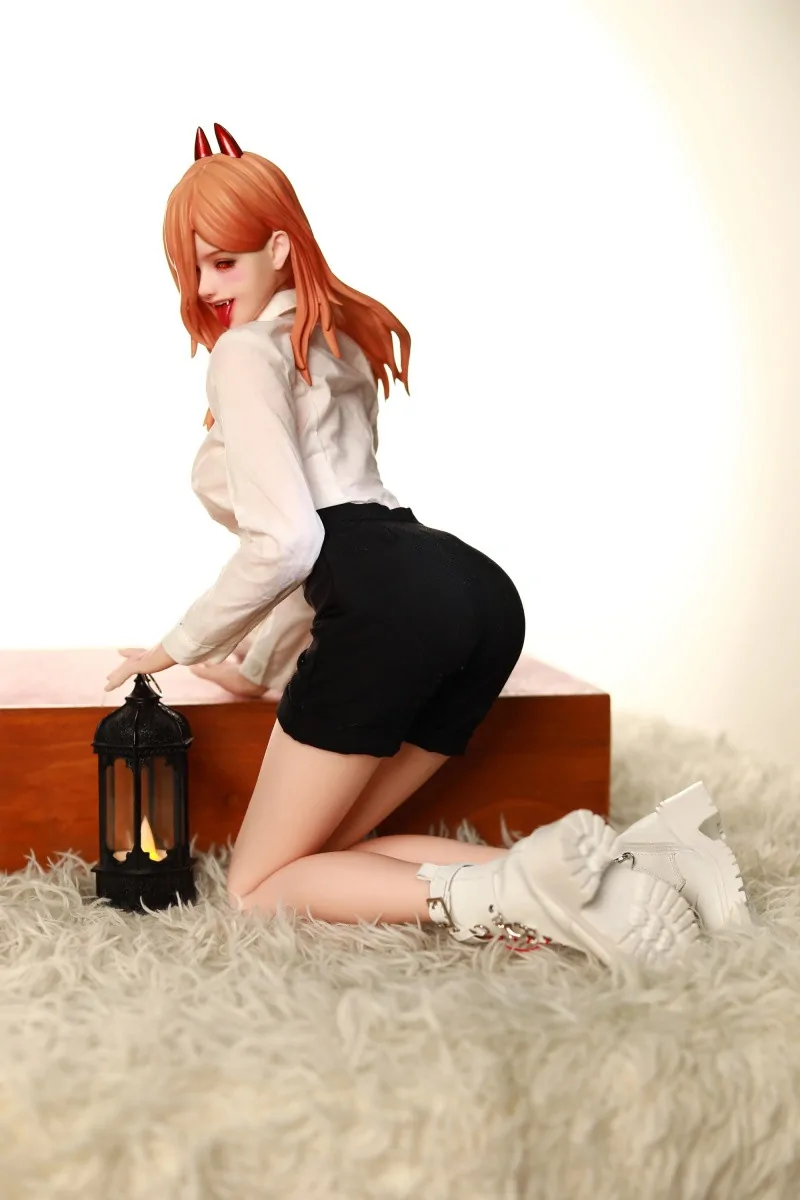 Her Familiar Public Safety Outfit Creates Contrast
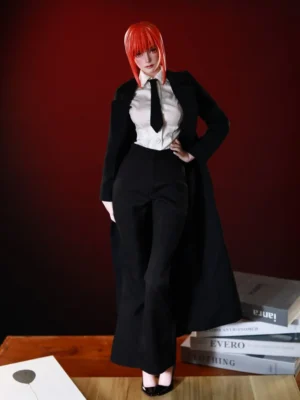
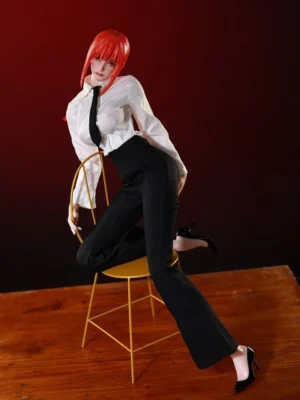
Power often wears a white shirt, tie, dark trousers and jacket associated with Public Safety. The clothing places her supernatural appearance inside an unexpectedly ordinary uniform.
Her personality constantly resists that order. The shirt may look formal, but the horns, sharp teeth and careless posture prevent Power from resembling a disciplined office worker.
This contrast makes the design effective. The clothing connects her to Denji, Aki and Public Safety, while the body language reminds everyone that the organisation has not truly domesticated the Blood Fiend.
Removing the jacket creates a more casual mood without losing recognition. Meanwhile, a loosened tie or open collar suits her habit of treating formal rules as optional.
Even a different outfit needs the same underlying attitude. Power should never look as though neat clothing has completely controlled her.
Power’s Body Language Carries Her Personality
Power rarely tries to make herself appear smaller. She raises her chin, opens her stance and occupies more space than the situation requires.
These choices support the superiority she constantly claims. Even when her argument makes no sense, her posture suggests complete confidence in it.
Movement adds another layer. Power leans forward when challenging someone, throws her arms outward during dramatic claims and reacts with her entire body when events surprise her.
A static interpretation must preserve some of that energy. A raised chin, wide stance, open mouth or angled shoulders can make the character feel active even when she cannot move.
Without expressive posture, the horns and hair may identify Power visually, but the most important part of her presence disappears.
How Power Changes Without Losing Her Identity
Power begins by placing personal survival above every other concern. She betrays Denji, avoids responsibility and treats cooperation as an inconvenience.
Meowy proves that she can form attachment. Life with Denji and Aki then expands her safe world beyond one cat and gives her something close to a family.
Later choices reveal how deeply those relationships have changed her. Fear continues to affect Power, yet loyalty gives her a reason to resist forces that once controlled her completely.
The development works because she never becomes a conventional hero. Power still boasts, lies and behaves impulsively. Emotional growth changes what she values without replacing her personality.
What Makes a Physical Power Interpretation Convincing?
A pair of horns alone cannot reproduce Power’s complete presence. The face also needs cross-shaped pupils, a sharp smile and enough expression to communicate her fearless self-image.
Hair should create a loose and energetic outline rather than the careful elegance associated with Makima. Familiar clothing then connects the figure to Public Safety and the everyday life she shares with Denji and Aki.
Posture provides the final element. Power should look ready to boast, laugh, fight or turn an ordinary disagreement into chaos.
When these features work together, the character remains recognisable before anyone considers the mature body beneath the clothing. Appearance and personality support each other instead of functioning as separate ideas.
Bringing Power Beyond the Anime Screen
The anime shows Power at her best through movement and sound. Her shouting, facial reactions and violent attacks create an energy that a single picture cannot fully reproduce.
Yet every episode follows a predetermined scene. Clothing, pose and camera position remain outside the control of the person watching.
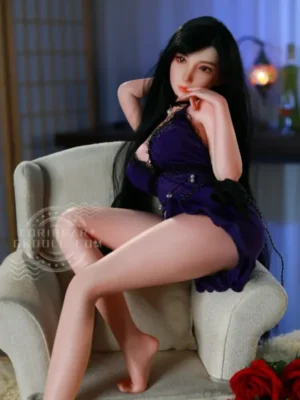
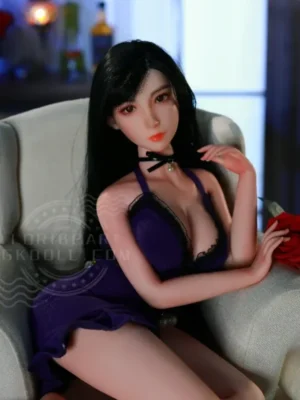
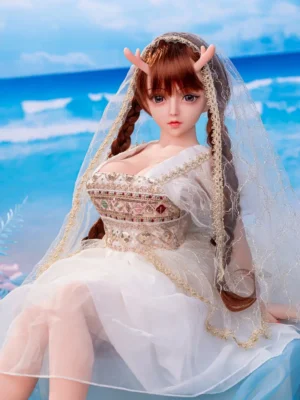
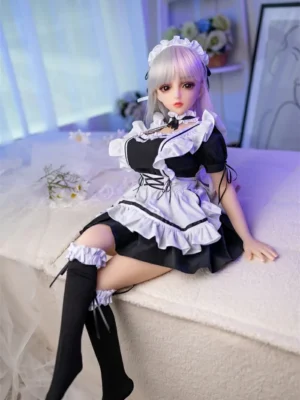
A physical Anime doll offers a different connection. It allows a familiar character to remain in a private space, where pose, clothing and surrounding atmosphere can change according to the owner’s preferred interpretation.
Power works especially well in this format because small adjustments can create different sides of her personality. A raised head and forward stance preserve her boastful confidence. A calmer seated pose can recall the rare moments when she feels safe with Denji and Aki.
The character no longer disappears when an episode ends. Her horns, eyes, pale hair and chaotic expression continue shaping the room around her.
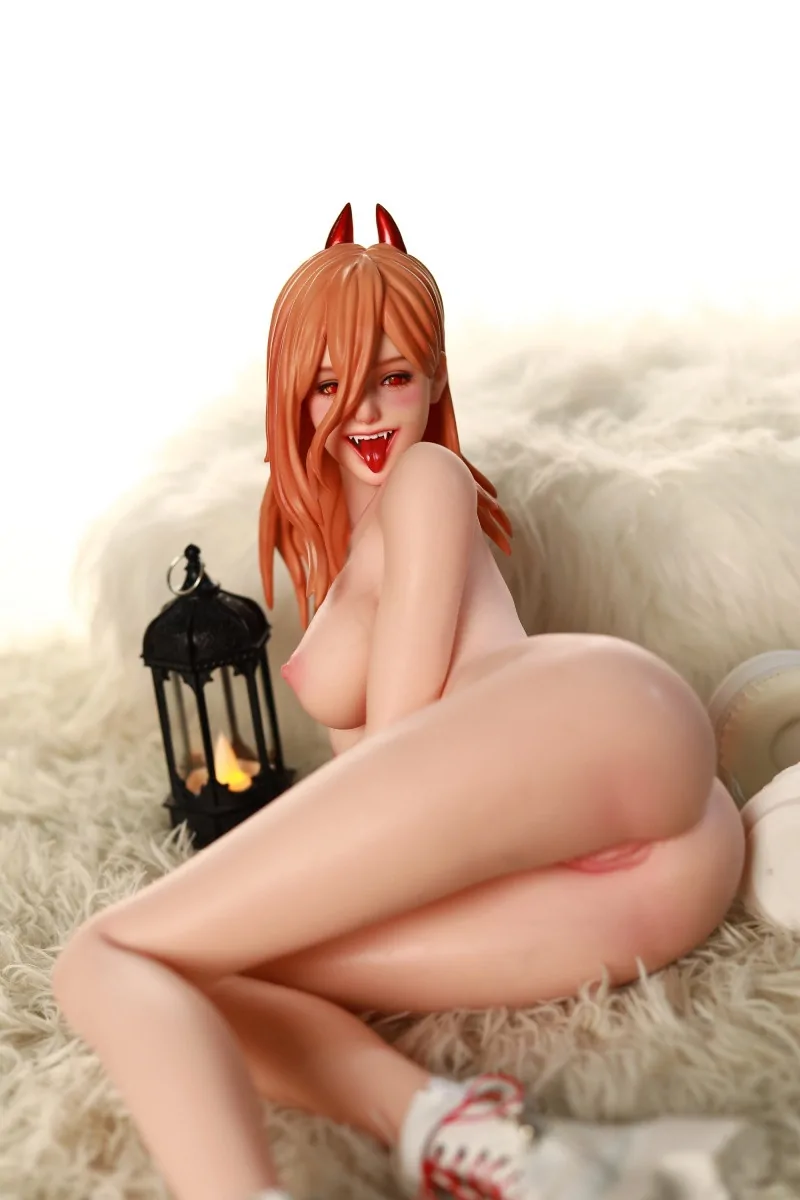 Choosing Power’s Physical Character Form
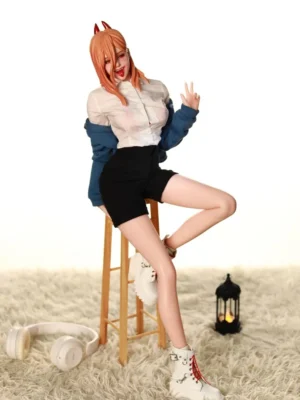
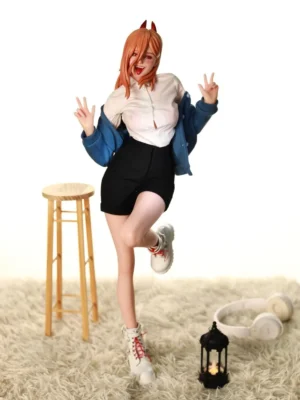
The Power figure brings together the red horns, long pale hair, unusual eyes, familiar clothing and expressive attitude that make the Blood Fiend immediately recognisable.
This character suits someone who wants visible personality rather than silent elegance. Power does not offer Makima’s emotional distance or Reze’s carefully concealed danger. Her attraction comes from confidence, disorder and the feeling that she could transform a quiet room simply by entering it.
When watching Power on a screen no longer feels close enough, the figure creates a more personal way to experience that presence. Different poses can emphasise her arrogance, playful energy or less common moments of vulnerability.
The mature body extends the character without replacing her. Power’s horns, eyes, facial expression and uncontrolled attitude remain essential, ensuring that the finished piece does not become an anonymous adult figure wearing a familiar costume.
Other character personalities appear throughout the complete Character Stories collection. The dedicated Power character page also connects her individual stories and future adult interpretations.
Why Power Remains Unforgettable
Power enters Chainsaw Man as a source of conflict and comedy. Her lies, confidence and selfish behaviour create entertainment before her emotional history becomes clear.
Meowy reveals her capacity for love. Denji gives her a relationship without conventional expectations, while Aki provides the stable home that neither of them knew they needed.
Fear exposes the vulnerability hidden behind Power’s loud claims. Loyalty later proves that vulnerability does not prevent her from making a meaningful choice.
Her lasting appeal comes from the fact that these qualities never become perfectly organised. Power remains arrogant and frightened, selfish and affectionate, ridiculous and emotionally important at the same time.
The Blood Fiend may first stand out through horns, sharp teeth and wild behaviour. What makes her unforgettable is the chaotic heart that gradually learns to consider other people part of its own world.
Power Anime FAQ
What anime is Power from?
Power appears in Chainsaw Man. She works as a Public Safety Devil Hunter alongside Denji and Aki Hayakawa.
Is Power a Devil or a Fiend?
Power is the Blood Fiend. The Blood Devil occupies a human corpse, giving her a human-shaped body with visible horns and unusual eyes.
What abilities does Power have?
Power manipulates blood and hardens it into weapons such as hammers. Her Fiend body limits the complete strength of the Blood Devil.
Why is Power so popular?
Her chaotic humour, distinctive appearance and unpredictable confidence attract immediate attention. Her growing loyalty to Denji and Aki gives that entertaining personality deeper emotional meaning.