Makima Figure: The Hardest Chainsaw Man Character to Get Right

Makima Figure: The Hardest Chainsaw Man Character to Get Right
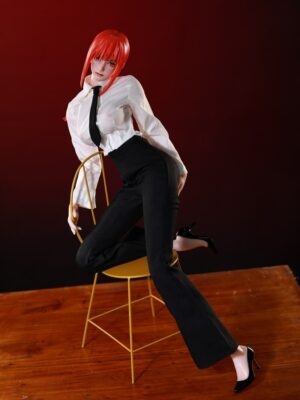
I wanted to make a Makima Figure not because she was the most popular character, but because after working through Reze and Power, I realized I still had not touched the most difficult part of Chainsaw Man. Reze gave me betrayal hidden inside closeness. Power gave me chaos, instinct, and raw life. Makima was different. What made her unsettling was never how dramatic she looked. Instead, it was the fact that she could remain completely calm while everyone around her had already started to lose balance. That realization changed the way I approached the entire piece.
Why I Did Not Start With Her
When I first got into Chainsaw Man, Reze and Power were much easier for me to approach.
Reze was the kind of character people can fall for immediately. Her softness, her voice, and the way she moved toward Denji all carried the feeling of a brief escape route. Then everything turned, and it became obvious that she had never really been an exit at all. Because that tension is direct and dramatic, shaping Reze felt natural from the start.
Power worked in a completely different way.
She was loud, unstable, wild, and impossible to smooth out. The first time she appeared, it felt like the whole atmosphere of the story had been torn open. With Power, the direction came quickly: momentum, vitality, disorder, and a presence that should never look too obedient or too composed.
Makima was never that easy.
Unlike Reze, she did not rely on an obvious contrast between sweetness and danger. Unlike Power, she did not rush forward through pure force of personality. Her presence was quieter, and because of that, harder to catch. For a long time, I kept returning to her without actually starting. The more I revisited the story, the clearer it became that she was the character I could not really avoid.
The First Time She Felt Wrong to Me Was When She Was Calm
I kept asking myself when I had first realized something was deeply off about Makima.
It was not when she displayed power directly. It was not when she took control in an obvious way either. The real moment came when she was calm, composed, and almost gentle, yet everyone around her had already begun moving in the direction she wanted.
That was clearest with Denji.
By nature, he is a character of direct emotion and direct desire. Put him in front of Makima, though, and something shifts. She does not need to shout. She does not need to pressure him. Often, a few words are enough, and he starts leaning toward her without even noticing it. The most disturbing part is not simply what she does. What lingers is the way other people slowly begin to believe the choice was theirs.
That was the moment my understanding changed.
For the first time, I saw that the hardest thing about Makima was not her face. Her real difficulty lies in that quiet, nearly invisible form of control. No open display of force is necessary. By the time you notice it, the situation has already tilted her way.
Why Reze and Power Could Not Teach Me How to Build Makima
Reze proved that closeness and betrayal could hold a character together.
Power proved that chaos and life force could do the same.
Makima depends on neither of those foundations.
Her contrast with Reze becomes obvious once you really look at it.
Reze feels like an unexpected detour in Denji’s life. Makima feels like the destination that had been waiting all along. Danger in Reze comes with a visible turn, which makes it easier to capture. Makima works in the opposite way. Rather than flipping in front of you, she feels like a net that had already been spread out long before anyone noticed it.
The contrast with Power is just as sharp.
Power begins as the kind of character no one can contain. She is loud, unruly, and almost anti-structure by design. Place her near Makima, however, and that wildness starts losing its center. That was when I understood that almost all of my instincts from Reze and Power would fail here. Emotion could carry the first two. Makima required something colder and more controlled.
She Could Not Be Treated Like a Character Who Performs for Attention
Makima has never felt like a character who spills everything onto the surface.
Her place in the story, the way she understands people, and the way she moves through the world all depend on restraint. Presence does not come from explosion. Attention does not come from theatrical posture. Her logic is simpler and colder than that: she does not need to say much, and people still begin to walk toward the path in front of them.
Because of that, the first things I cut away were the ones that would have made the piece look more obviously dramatic.
I did not want her too aggressive. A provocative pose would have pushed her in the wrong direction. Too much force would have made her look like she was trying to act powerful. Makima could not look like she was performing control. She had to feel like control itself. Less expression, less theatrical movement, and more stillness turned out to be the right path.
That Was the Point Where I Finally Found Her Direction
At that stage, proportion and material were no longer enough on their own.
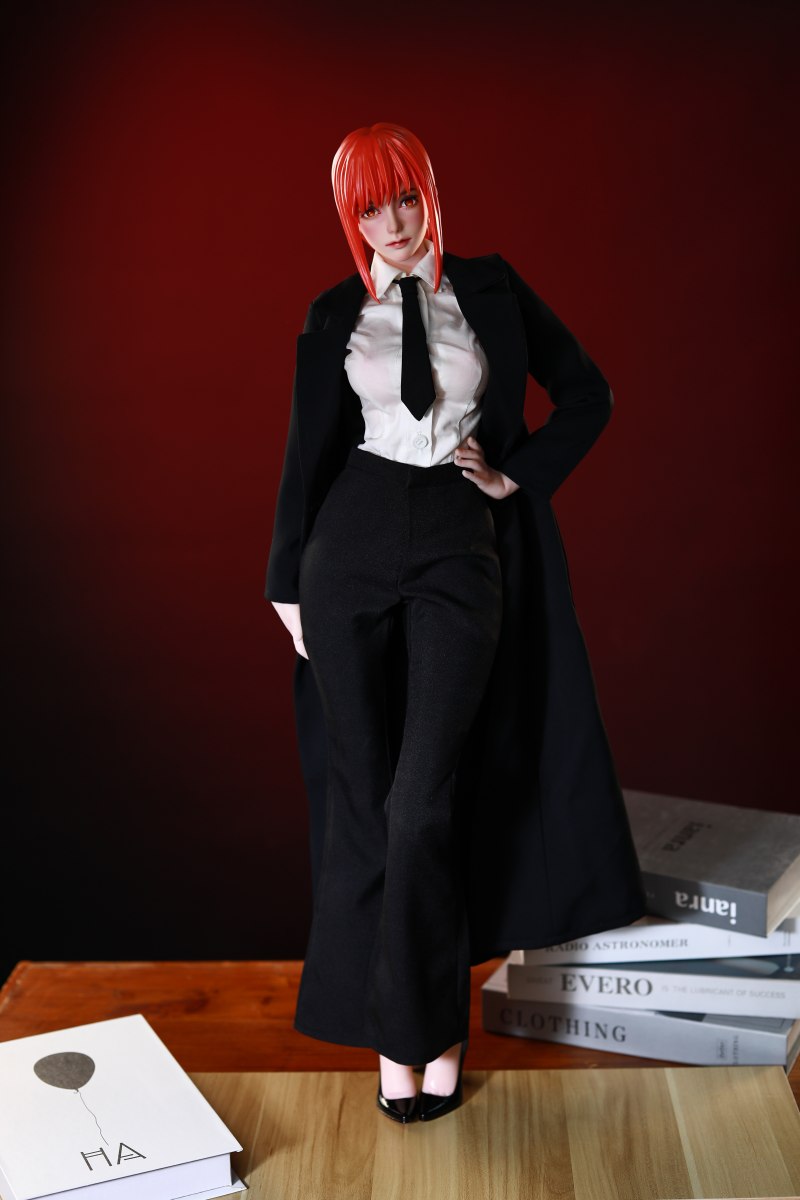
What mattered was whether those choices could actually support the stillness in Makima that makes everyone else feel unstable. For me, these details were never just product specs. They were structural choices that had to serve her character. Looking back at the finished Makima Figure, I kept asking myself the same question: could it really hold that quiet pressure she carries in the story?
The 1/3 scale stayed because she needed real visual authority.
Makima is not the kind of character who wins attention through large gestures. She needs the sort of presence that can hold the center of a display without stepping forward. Too small, and she starts to feel ordinary. Once the scale opens up, that quiet dominance begins to make sense.
A full silicone body also felt necessary because she could not read as light.
In my mind, Makima has always felt controlled, heavy, and composed. The piece needed enough visual and structural weight to support that impression. A lighter or sharper material language would have made her feel hollow in exactly the wrong way.
As for the torso and chest treatment, smooth transition mattered more than obvious emphasis.
Those details were never meant to stand apart as loud selling points. Instead, I wanted them to disappear into the full body line so the figure would remain complete, measured, and unforced. Makima does not work through exaggeration. She works when everything feels restrained and held together.
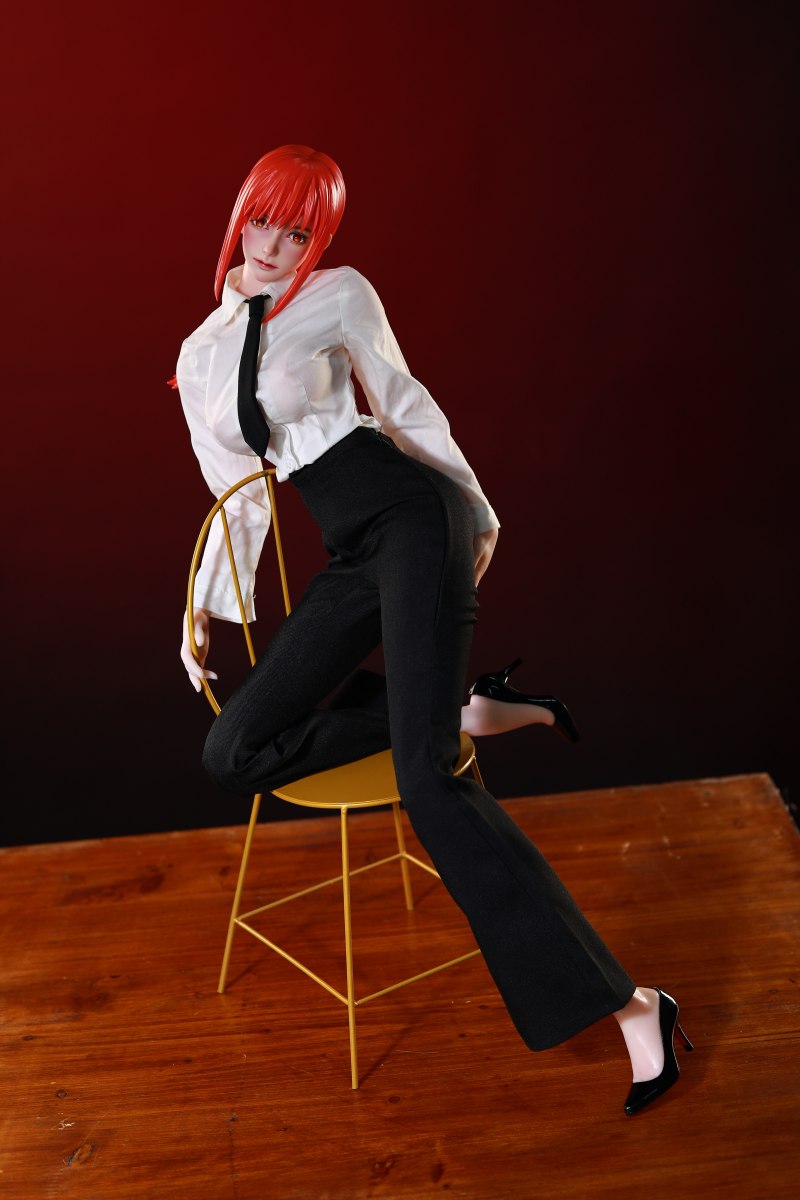
What Finally Made Her Work Was the Skeleton, the Articulation, and the Way She Stood
By the end, I was completely certain that the real danger was not in the face but in the stance.
Her head cannot tilt too low, or she becomes merely cold. Raise the chin too high, and she starts looking openly confrontational. Eyes that are too sharp destroy the calm surface that makes her more unsettling. Let the shoulder line loosen too much, and the entire center of gravity falls apart. Too much activity in the hands creates another problem, because the gesture starts to feel like performance rather than control.
That is why the internal metal skeleton, articulated joints, and poseable structure mattered so much.
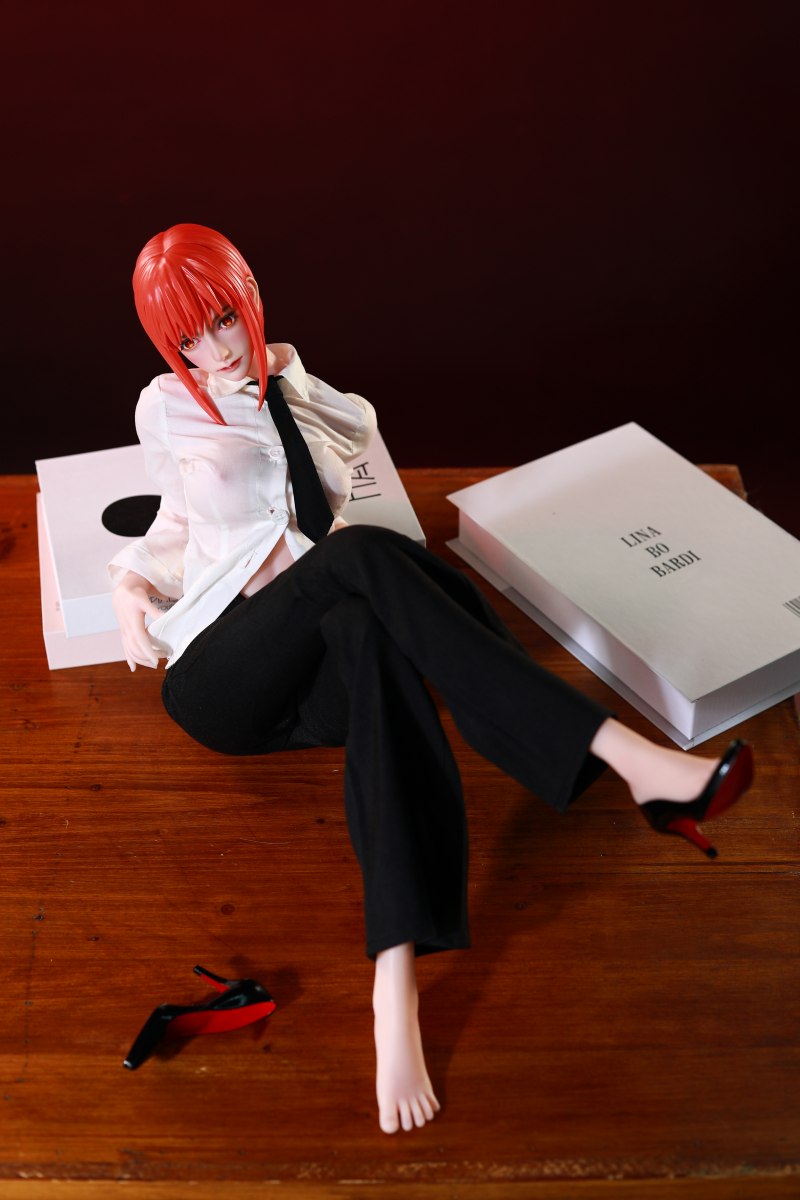
I did not need one fixed pose. What I needed was a presence that could be adjusted slowly until it felt right. Refining the head angle, shoulder line, arm position, and weight distribution was the only way to push this chainsaw man makima figure beyond simply looking like Makima and closer to actually standing like her.
In the final pose, everything became quieter.
Her head sits slightly centered, and her gaze stays steady without rushing toward anyone. The shoulders remain controlled. Her gestures are restrained. Pressure does not come from leaning forward. The center of gravity stays entirely on her side. Even the spacing at her feet mattered. A wide step felt wrong, so I left only half a step in front of her, just enough to suggest that she had not moved closer, but had never yielded ground either. That was the point where she finally felt right.
Why I Knew I Had to Make Her
For a long time, I assumed a character piece succeeded or failed based on the obvious things: whether the face was right, whether the outfit was right, whether the finish looked polished enough. Makima was the first time I understood clearly that those things were not the real test.
Reze works because danger hides inside tenderness.
Power works because emotion grows inside disorder.
Makima works because she does almost nothing, and other people are already losing balance.
Revisiting her through the official Chainsaw Man series page only made that feeling stronger. The more I looked back at her role in the story, the clearer it became that her real force was never noise, but control.
What I finally got right
was not her face.
It was the moment she stood there,
and everyone else had already lost.