Life Size Doll Guide: Materials, Weight and Realism

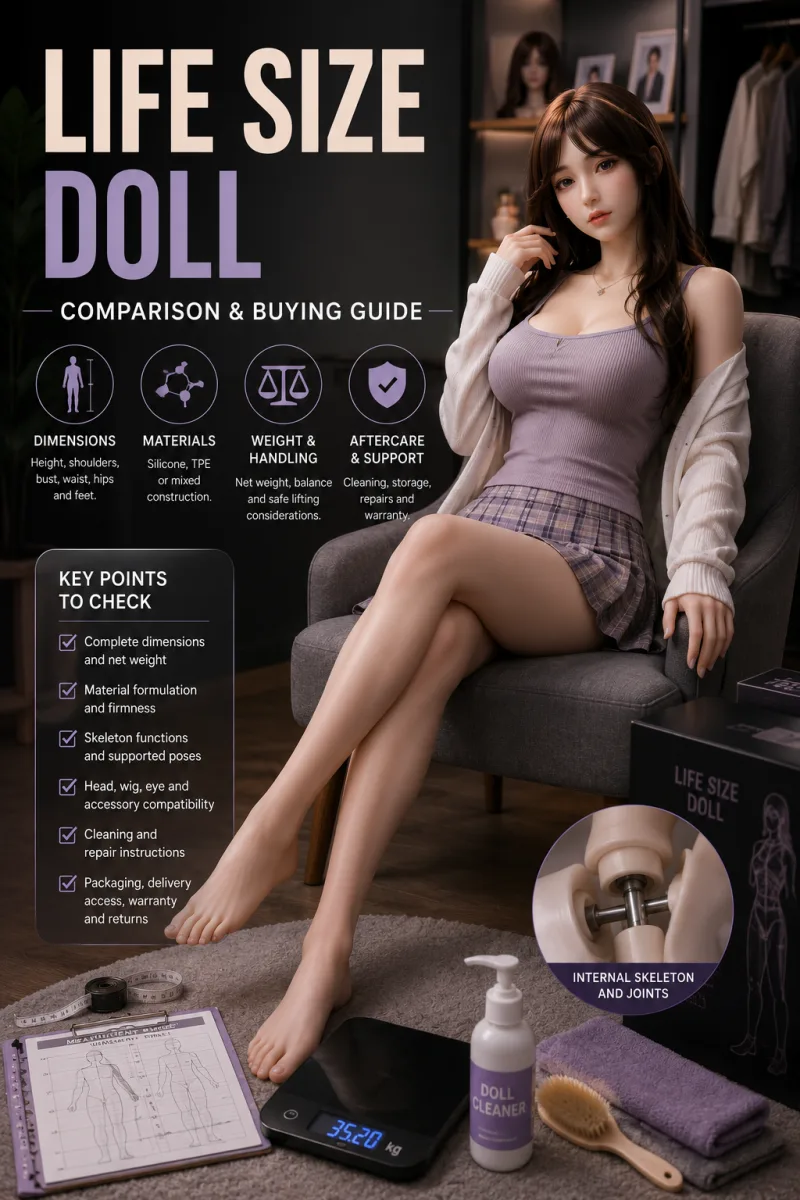
A life size doll is designed around near-human scale, but the phrase does not guarantee a particular height, proportion or construction. Two dolls described as life-size can differ substantially in weight, shoulder width, body shape, joint movement and realism. A useful comparison therefore starts with measurable specifications rather than a single marketing label.
Near-human scale affects handling, storage, clothing and structural design at the same time. The doll features and realism reference organises the related material and construction topics, while the LORIBEAR shop provides current model specifications.
| Feature | Information to verify |
|---|---|
| Dimensions | Standing height, seated height, shoulders, bust, waist, hips and feet. |
| Construction | Body material, head material, skeleton type and supported poses. |
| Handling | Net weight, balance, lifting points and route to the storage area. |
| Aftercare | Approved cleaners, drying method, storage position and repair support. |
What qualifies as life-size?
There is no universal height that makes a doll life-size. In ordinary use, the term means that the product is intended to represent a complete human-scale body rather than a bust, torso or compact figure. Listings may range from shorter stylised bodies to tall realistic designs.
Check standing height, seated height, bust, waist, hips, shoulder width, inseam and foot size. These measurements help you judge proportion, clothing fit and storage requirements. They also make it easier to compare a lifesize doll with another model without relying on photographs taken from different angles.
Silicone, TPE and mixed construction
TPE is valued for softness and flexibility, while silicone is often chosen for sculpted detail, stable colour and a different surface feel. Formulations vary, so broad material labels should not replace product-specific information. Ask about softness, surface texture, supported cleaners, repair options and compatibility with powders or dressings.
Some designs combine materials—for example, a silicone head with a TPE body. Mixed construction can balance appearance, flexibility and cost, but each part may require a different care routine. Keep the maker’s instructions with the doll so that cleaning products are not accidentally used on the wrong surface.
Weight and safe handling
Human scale does not mean human-like weight distribution. A dense doll cannot assist with a lift, and flexible limbs may shift while being moved. Confirm the net weight and decide how the product will travel between its storage and display locations before ordering.
Plan a clear route, remove obstacles and support the torso and hips rather than pulling a limb. If a lift feels awkward, use a second person or suitable handling aid. The Health and Safety Executive provides clear principles in its manual-handling guide, including assessing the load, environment and individual capability.
Skeleton and poseability
Many full-body dolls contain a metal skeleton with articulated joints. Ask for a joint map and determine which poses are supported. Standing may require a special foot design or external stand; it should never be assumed from promotional photographs.
New joints can be firm. Move them slowly and stop when resistance increases. Sharp twisting can strain the internal joint or stretch the surrounding material. Finger wires are intended for gentle positioning, not for lifting or supporting weight.
Face, hands and realism
Realism comes from the relationship between features rather than one dramatic detail. Look at the transition between head and neck, the scale of hands and feet, skin texture, eye alignment, hairline and the way joints sit beneath the surface. Close, evenly lit photographs are more useful than heavily edited lifestyle images.
Removable wigs and eyes make styling easier, while implanted hair can create a different finish but may require more careful handling. Ask which parts are removable and whether replacements are available before choosing a highly customised appearance.
Storage, clothing and display
Measure doorways, stairs, cupboards and the final storage area. A doll that fits the room may still be difficult to move through a narrow route. Store it clean and dry, protected from sunlight, heat, dust and dye transfer. Avoid prolonged pressure on small areas and do not leave joints sharply flexed unless the manufacturer allows it.
Buy clothing from body measurements, not advertised height. Flexible fabrics, smooth linings and adjustable fasteners reduce fit problems. Test dark fabric for dye transfer and remove tight accessories after display. Shoes should match both length and width without forcing the toes.
What to check before purchase
-
- Complete dimensions and net weight.
- Material formulation and firmness.
- Skeleton functions and standing requirements.
- Head, wig, eye and accessory compatibility.
- Cleaning and repair instructions.
- Packaging, delivery access, warranty and returns.
Final perspective
The best life size doll is not simply the tallest or most detailed. It is the model whose dimensions, weight, material and care requirements match the owner’s space and expectations. Careful comparison before purchase prevents many of the most common handling and storage problems.
Frequently Asked Questions
Is there a standard height for a life size doll?
No universal height standard applies. The description generally refers to a complete body designed at or near human scale, so the full measurement sheet is more reliable than the product label.
Which material is more realistic, silicone or TPE?
Realism depends on formulation, sculpting, pigmentation, surface texture and construction. Silicone often retains fine sculpted detail, while many TPE formulations emphasise softness; neither material guarantees a particular result.
Can one person safely move a life size doll?
That depends on net weight, body balance, grip points, route and individual capability. When the load is awkward or cannot be kept close to the body, a second person or suitable handling aid is the safer option.
Can a life size doll stand without support?
Only models specifically designed for standing should be placed upright, and some still require a stand. Foot construction and manufacturer instructions must be confirmed before attempting a standing display.
Use the Collector Guides directory to continue with material, styling and maintenance topics.