
- Chainsaw Man
- Resident Evil
- Street Fighter
- Spy x Family Figures
- Azur Lane
- Final Fantasy
- Dragon Ball
- Naruto
- Neon Genesis Evangelion
- Nier: Automata
- Kuroinu Figures | Olga Discordia Dark Elf
- Queen Pharnelis-Goblin
- Non Virgin Bunny Girl
- Prison School
- The King of Fighters
- One Piece
- Figure Heads & Accessories
Interactive Sex Device Guide: Controls, Motion and Setup

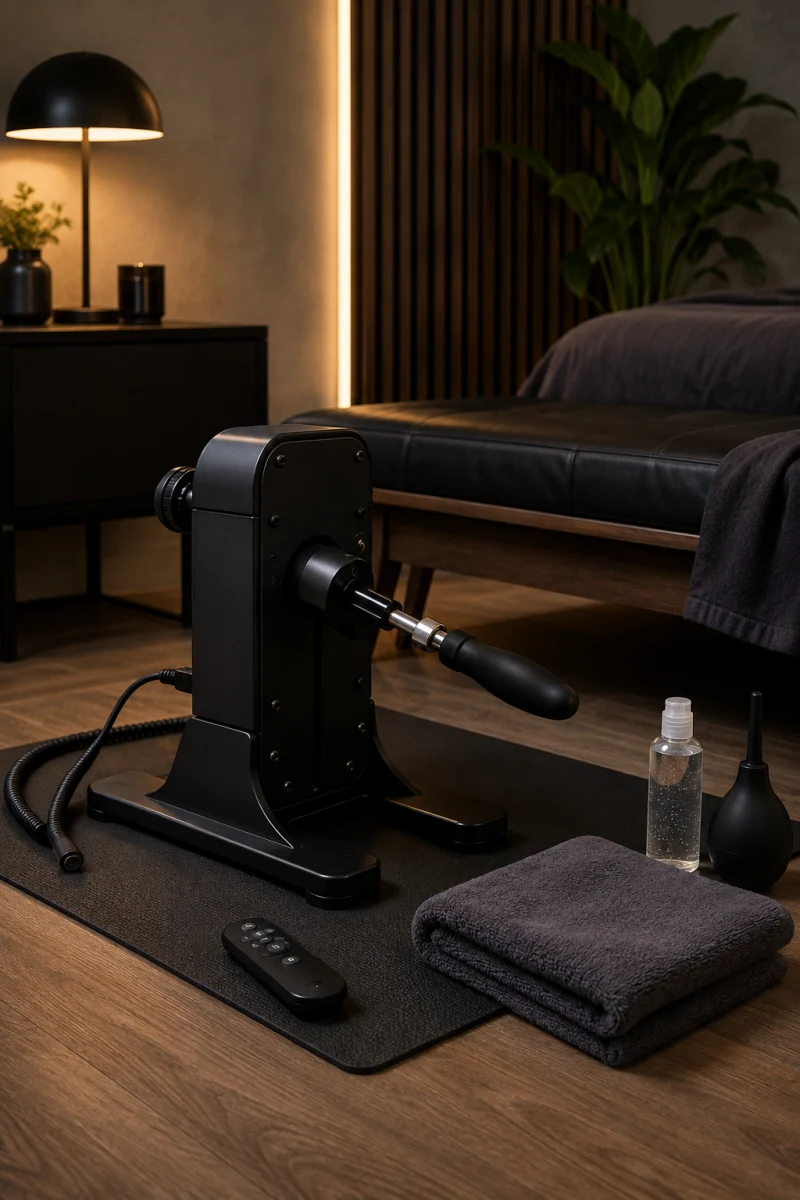
An interactive sex device uses motors, software, remote commands or physical controls to change motion during use. A home sex machine is one of the largest examples. Its motor repeatedly changes direction, the frame transfers force into the floor or supporting furniture, and the attachment follows a fixed mechanical path. A reliable setup therefore depends on stability, alignment, controllable movement and an immediate way to stop the machine before speed becomes relevant.
The machine should feel predictable before anyone enters its operating area. Assemble it completely, secure the frame and perform an unloaded test through the planned stroke range. This dry run can reveal loose fasteners, frame movement, cable problems, unexpected vibration and an attachment that drifts away from its intended path.
Retail listings may describe powered models as a ladies sex machine or an auto sex machine. Those labels describe marketing position or automatic movement, but they say little about practical performance. Stroke length, speed range, frame stability, attachment compatibility, motor controls and emergency stopping deserve far more attention than the product name alone.
Measure the operating envelope
The machine’s stated floor dimensions describe only its stationary footprint. The true operating envelope also includes the full stroke, attachment length, moving arm, cable route and the space a user needs to enter, reposition or move away comfortably.
Keep hair, loose clothing, bedding, hands and cables away from cranks, sliders and linkages. These areas can create pinch points even when the machine operates slowly.
A unit positioned beside a bed can transfer repeated movement into the bed frame. Lightweight furniture may begin to shift even when it feels stable during a simple hand test.
A freestanding machine should sit level with all feet firmly touching a non-slip surface. Use the manufacturer’s feet, mat or anti-vibration components where provided. Do not rely on folded fabric or random household objects to stabilise an uneven frame.
Mounted equipment needs the hardware and load-bearing structure specified by the manufacturer. An improvised clamp may feel secure while stationary but rotate or loosen after repeated directional force.
Leave open space around the stop control and the user’s exit route. Storage boxes, character displays and nearby furniture should never block emergency access.
Alignment decides whether motion remains comfortable
Start with the shortest practical stroke and the lowest available speed. Watch the attachment complete several full cycles before anyone approaches the moving path.
The attachment should travel along a consistent line without rising sharply, twisting sideways or changing angle near the end of the stroke. If the path looks wrong, reposition the machine instead of asking the user’s body to compensate.
Pillows, wedges or a different frame height can create a more natural relationship between the body and the drive path. Small adjustments to the machine often improve comfort more effectively than forcing a difficult body position.
Longer attachments increase the total reach of the assembly and can magnify small alignment errors. Recheck the path whenever the attachment, adapter or stroke length changes.
Quick-release fittings need enough space to operate immediately. The user should not have to reach through a moving linkage to release an attachment.
Check every adapter for play before use. Threads, pins and locking mechanisms should engage cleanly and hold the attachment firmly. A connection that depends only on friction can loosen once the motor starts cycling.
 Controls require a direct stop route
The local user or nearby partner should be able to stop the machine without moving through the mechanism. A dedicated physical stop control provides a more reliable option than depending only on an app or wireless remote.
Test the stop function during the unloaded setup. Confirm how quickly the drive stops and whether any part of the mechanism continues moving after the command.
Power recovery also matters. When the manual permits testing, disconnect and restore power to learn how the machine behaves. It should not unexpectedly resume at the previous speed when electricity returns.
Remote or interactive control adds another person or software layer to the experience. Agree on the maximum speed and stroke before connecting. Keep a local stop control available at all times.
The adult accessories reference places powered controls within the wider decisions around materials, cleaning and communication.
Interactive features should add convenience and variety without taking control away from the person physically beside the machine.
Electrical condition is part of every inspection
Use the supplied power unit or an exact manufacturer-approved replacement. A connector that fits physically may still deliver the wrong voltage, current or polarity.
Route power leads away from moving arms, wet cleaning areas and walking paths. Leave enough slack for normal operation without allowing the cable to enter a linkage or wrap around the frame.
Inspect the cable, plug and power supply before every session. Damaged insulation, loose sockets, exposed conductors or unusual heat are reasons to stop immediately.
Changes in motor sound can reveal developing problems. Grinding, irregular speed, repeated clicking or a burning smell should never be treated as normal wear.
Adult products can face electrical faults and recalls just like other powered devices. Electrical Safety First records a powered adult toy recall involving a heating and burn risk, showing why model numbers, batch information and recall checks remain relevant for intimate equipment.
Separate attachment cleaning from machine maintenance
The body-contact attachment and the mechanical drive system need different care. Remove compatible attachments before washing so water and cleaner remain away from the motor, control box, bearings and electrical connectors.
Follow the cleaning method for the attachment material. Silicone, TPE and other elastomers may require different cleaners, lubricants and drying routines.
Body lubricant should never substitute for mechanical grease. Likewise, machine oil or bearing lubricant must never migrate onto an insertable attachment.
After cleaning, allow the attachment to dry completely before reconnecting it. Inspect the base and adapter at the same time for distortion, tears or unexpected movement around the mounting point.
Tighten only the fasteners identified for routine inspection. Excessive force on an unfamiliar adjustment point can strip threads or change the alignment.
A short pre-use checklist keeps complex equipment easier to manage: confirm that frame fasteners remain secure, the attachment is locked, cables stay clear, the stop control works and the planned maximum stroke has been agreed.
If the same bolt repeatedly loosens or the attachment begins drifting sideways, stop using the machine. Repeated tightening during a session can hide a mechanical problem that needs proper inspection.
 Check floor loading and vibration paths
The machine’s static weight represents only one part of the load. Repeated acceleration creates changing forces that can make a lightweight frame move across a smooth floor.
Retest stability whenever stroke length or speed changes. A frame that remains still at a short stroke may begin moving when the drive arm travels farther.
Use the manufacturer’s anti-slip feet or recommended mat. Do not wedge the frame against a wall as a substitute for correct stabilisation because that simply transfers force into another structure.
Upper-floor rooms need extra attention because vibration can travel through joists even when the motor sounds relatively quiet nearby.
Keep the machine away from unstable shelves, glass displays and furniture that may vibrate or shift. This matters especially in rooms that also contain collectible figures or fragile objects.
If a bench, platform or bed supports the machine, confirm that the structure can handle both the static weight and repeated moving load. Furniture designed only for resting weight may respond very differently to continuous directional force.
Match the attachment to speed, stroke and body angle
Every attachment changes the operating geometry. A longer attachment increases total reach and can create more sideways leverage at the connector.
After changing attachments, return to the shortest practical stroke and low speed. Watch several complete cycles and confirm that the attachment remains straight.
Flexible material can soften contact, but flexibility cannot correct poor alignment. Repeated bending at one point can stress both the attachment and its mounting connection.
Inspect the attachment base before each session. Tears, distortion, looseness or cracking around an adapter can become more serious under repeated motion.
Use only lubricant that suits the attachment material. Keep excess liquid away from bearings, electrical sockets, control boxes and the floor.
Label spare adapters when several fittings look similar. Forcing an incompatible thread into the drive arm can damage both pieces and produce an unreliable connection.
Design communication around the stop procedure
Before partnered or remote use, both people should know who can change speed, who can adjust stroke and which command means immediate stop.
The stop command should end movement first. Explanations and discussion can happen after the machine becomes stationary.
A remote participant should never become the only person capable of stopping the device. Someone physically beside the machine needs immediate local control.
Test communication while the motor is running. Words that sound clear in a quiet room can become difficult to hear once mechanical noise and vibration begin.
If verbal communication may become unreliable, agree on a simple alternative signal that the local user can perform easily.
Loss of video, audio or network connection should trigger a stop rather than leaving the previous command running. Remote functionality should increase flexibility without weakening local control.
 Run a post-use inspection before storage
Allow the motor to cool in open air after use. Disconnect power before wiping the frame or inspecting moving components.
Look for shifted fasteners, cracked coatings, frayed leads and new marks around linkages. Fine metal dust near a joint can indicate mechanical wear.
Check whether body lubricant reached the drive system. Even body-safe lubricant can contaminate mechanical parts or create a slippery floor hazard.
Compare the attachment path with the pre-use alignment. New sideways drift can indicate a loose adapter, worn linkage or frame movement.
Store power leads and controls without tight bends or pressure near connectors. Repeated stress close to a plug can damage a cable internally even when the outer insulation looks normal.
Keep attachments completely dry and separate from mechanical oils or dark materials that may affect their surface. A short note about unusual noise or loosened parts makes the next inspection easier.
Give a mechanical setup an intimate character
Even an advanced interactive sex device can feel visually clinical when the room contains only motors, frames, cables and control boxes. For some adults, the atmosphere becomes more engaging when technology shares the room with a recognisable character.
A character-focused figure creates a different type of attraction. Facial expression, hairstyle, costume and body presence can give the space an emotional focus that machinery alone cannot create.
The compact 80 cm Tifa Figure brings a recognisable Final Fantasy-inspired presence into that setting without taking up the space of a full-size doll. Her full-silicone body, dark implanted hair and selectable head styles give collectors a softer, more character-driven contrast to the mechanical equipment nearby.
For adults already drawn to Tifa’s confident and familiar appearance, the figure can become a visual centrepiece rather than another functional device. The smaller format also makes it easier to position the character safely outside the machine’s operating envelope.
The LORIBEAR shop brings together more anime- and game-inspired character designs in different scales and styles. This gives collectors more freedom to choose a character whose expression, body format and personality match the atmosphere they want to create around a private setup.
Technology can provide repeatable movement, but character identity creates a different kind of connection. Whatever figure or display surrounds the machine, keep it outside the moving path and preserve immediate access to every emergency control.
Home sex machine setup questions
Can a sex machine be tested on a bed?
Only when the manufacturer supports that mounting method. Lightweight bed frames and improvised clamps can shift under repeated directional force.
What setting should be used first?
Begin with the shortest stroke and lowest speed during an unloaded test. Confirm alignment, stability and stop control before increasing either setting.
Is an app enough for emergency stopping?
No. A local, immediately reachable physical stop control provides more reliable access because phones, apps and wireless connections can fail.
What should happen if remote communication disconnects?
The machine should stop instead of continuing with the previous command. Local control should always remain available to someone physically beside the equipment.
When should the machine be taken out of service?
Stop using it after frame cracks, loose linkages, cable damage, unusual heat, burning smells, erratic movement, repeated alignment drift or failure of the stop function.