Cammy R34: Athletic Curves and Her Different Faces in Fan Art


Cammy R34 artwork takes a familiar Street Fighter heroine beyond the arena, often placing her in glamour portraits, alternative outfits or nude studies. Her appeal has a clear physical foundation: powerful thighs, a defined waist, visible muscle tone and a direct, focused expression. The blonde hair and familiar costume details establish the connection, but her athletic figure gives that connection a distinctive character.
A drawing, a comic page and a three-dimensional render can present that figure very differently. An illustration may emphasise strong outlines and exaggerated curves. A comic can give her an exchange of expressions across several panels. A render may resemble a posed photograph. These formats leave room for different interpretations of Cammy without making every work another version of the same image.
A Figure Defined by More Than One Feature
Cammy’s lower body is particularly prominent in her familiar appearance. Her thighs, hips and legs give her silhouette much of its strength, while the narrower waist creates a clear contrast above them. This is a different visual balance from a design that concentrates almost entirely on the bust. The impression is of an athletic woman whose body belongs to a fast, close-range fighter.
Her shoulders and arms complete that impression. Visible definition gives the upper body structure without necessarily making it bulky. In a full-length illustration, the relationship between shoulders, waist and legs matters more than any isolated measurement. Those proportions allow Cammy to look strong and curvaceous at the same time.
Adult fan art sometimes exaggerates her chest, hips or thighs beyond their familiar game appearance. That can produce a deliberately heightened pin-up style. Other portrayals keep the figure closer to the game’s proportions and place more emphasis on muscle tone or posture. Neither approach reveals an additional official version of her body; each reflects the artist’s interpretation.
The most immediately noticeable difference is often balance. Enlarging one feature changes the effect of everything around it. A drawing with heavily exaggerated curves may look playful or cartoon-like, while a more restrained figure can retain the physical directness associated with Cammy’s fighting style. Fans may enjoy either, but the resulting images offer different kinds of appeal.
The Classic Green Look Has a Graphic Boldness
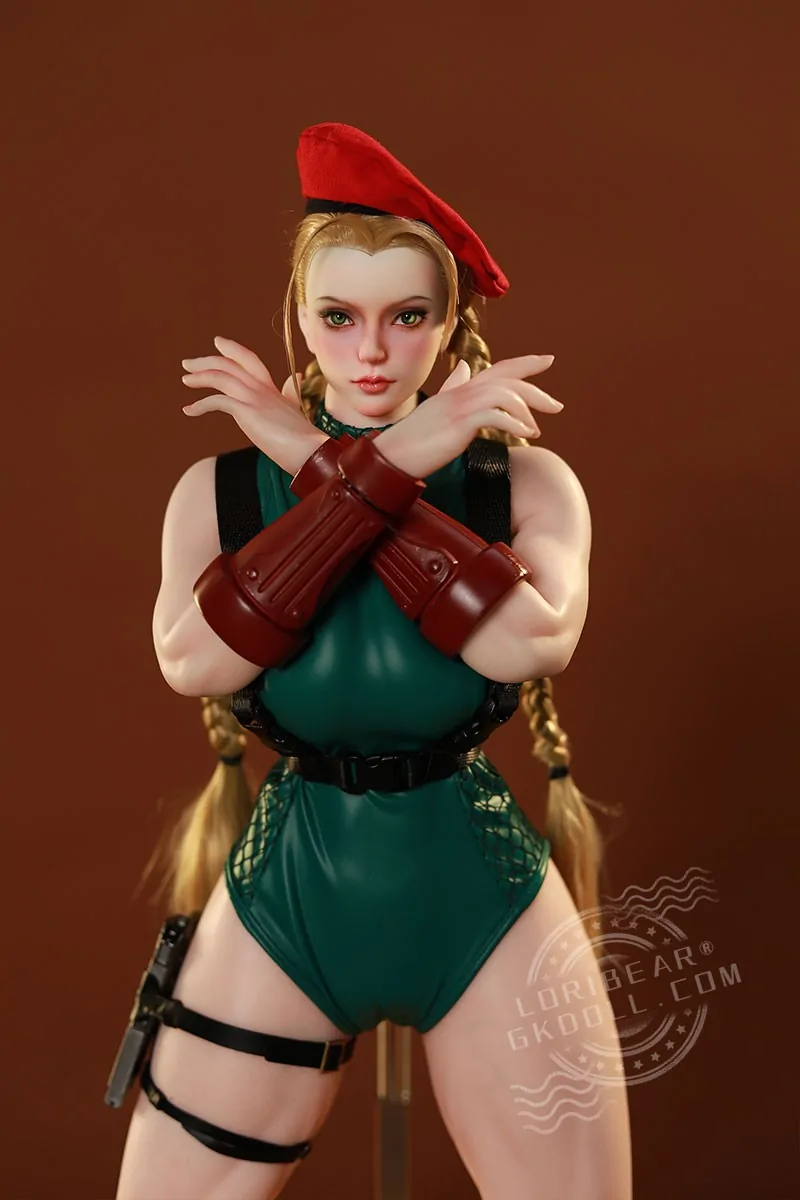
Cammy’s familiar green leotard leaves much of her legs visible and follows the shape of the torso closely. The high-cut outline makes the transition between waist, hips and thighs particularly noticeable. Combined with red gloves and a red beret, it creates a bright, sharply defined appearance that works especially well in illustration.
The long blonde braids add another recognisable shape. They extend beyond the head and shoulders, giving a still pose something of the movement associated with her in the games. In a turned portrait, the braids can remain visible even when the face is partly concealed. Their length makes them an important part of the overall outline rather than a minor accessory.
The contrast between the close-fitting green outfit and heavier gloves also contributes to the appeal. The body looks streamlined, while the hands carry a stronger visual weight. This combination preserves something of Cammy’s combat identity even in a portrait that has no opponent, attack or arena in view.
Adult illustrations may retain the beret or gloves while changing the rest of the outfit. Those details can connect an alternative portrayal to the familiar character. However, they do not do all the work alone. Her face, hair and physical bearing still contribute to whether the image feels specifically like Cammy rather than an unrelated figure wearing borrowed accessories.
 Short Hair Changes the Mood of a Portrait
The shorter blonde hairstyle associated with Cammy’s Street Fighter 6 appearance creates a noticeably different frame around her face. Without the long braids extending through the image, attention stays closer to the head, neck and shoulders. A portrait can feel more direct because there is less flowing hair between the face and the surrounding space.
That change gives fan artwork another starting point without requiring a completely different personality. The shorter hair suits a sharper, contemporary look. An alternative casual outfit can therefore feel connected to this appearance, while the classic braids more immediately recall the older green-and-red silhouette.
Her expression remains important in either version. A level gaze can make a glamour portrait feel self-assured. A sideways glance may suggest that something outside the frame has caught her attention. The difference is small, but it gives the image an occasion rather than leaving the face as a decorative feature above the body.
Capcom’s official Cammy introduction describes her as a highly capable member of Delta Red with a somewhat moody disposition. That supplies a useful foundation for her presence: she does not need an exaggerated smile or constant flirtation to remain engaging.
What Nude Studies Bring into View
In nude fan studies, the costume no longer provides the familiar green outline around Cammy’s torso. The body itself becomes the main subject, with greater emphasis on the shoulders, abdomen, hips and legs. This makes the artist’s choices about anatomy and proportion much more apparent than they would be beneath a recognisable outfit.
Cammy’s athletic association gives such work a specific point of reference. A defined abdomen, developed thighs and a supported stance can connect the figure to a physically active character. The result need not exaggerate every muscle. Subtle structure can convey strength, particularly when the pose allows the body to look balanced rather than rigid.
A back or three-quarter study brings the shoulders and back into greater prominence. A frontal portrait gives more attention to the face and the relationship between chest and waist. These changes of view produce different impressions of the same imagined figure. They can expand the portrayal beyond repeating one pose with different levels of exposure.
The details remain fan-created rather than official anatomical information. That leaves room for stylisation, but it also explains why different works can look inconsistent with one another. Enjoying a particular interpretation does not require treating its proportions as the definitive version of Cammy.
A Comic Gives Her Time to React
A comic can offer something a single glamour illustration cannot: a sequence of reactions. Cammy might begin with her usual focused expression, notice an unexpected remark and respond with a brief change in her face. The appeal comes partly from following that progression. The reader encounters a character who reacts, rather than a figure held indefinitely in one pose.
For example, an invented off-duty exchange could move from an impatient glance to a dry reply and then a small smile. Nothing elaborate needs to happen for the sequence to feel personal. The change has meaning because the earlier panel established a different mood. A smile becomes an event within the page rather than simply the default expression.
Her direct manner also lends itself to concise dialogue. Long, decorative speeches can feel at odds with a character associated with quick decisions and precise action. A short response, a pause or an exchanged look may carry the interaction more naturally. The attraction of a character-focused comic can depend as much on that voice as on its visual styling.
Capcom also gives Cammy a fondness for cats, a detail that introduces an everyday interest beside her professional identity. A fan comic can draw humour or warmth from that contrast without turning her into a different person. Small, specific details like this provide more character than assigning her an entirely generic off-duty personality.
Our Cammy character stories explore more of her background. That wider context gives fans additional ways to connect with an interpretation, especially when a comic allows her to speak and interact rather than relying only on a striking first image.
 Three-Dimensional Artwork Offers a Different Encounter
A three-dimensional portrait gives Cammy an appearance closer to a staged photograph. The volume of the shoulders, the turn of the waist and the distribution of body weight become especially noticeable. Unlike a strongly stylised drawing, this presentation invites the viewer to read the figure as something occupying a continuous space.
Lighting changes that impression considerably. Broad, soft light can make a portrait feel relaxed, while stronger shadows emphasise the structure of the face and muscles. The same figure may therefore appear softer in one render and more forceful in another. The difference does not necessarily come from changing the body itself.
The setting adds another layer. A simple studio background concentrates attention on the figure, whereas an ordinary room gives the portrait a more everyday context. Neither needs to pretend to recreate an official scene. An alternative setting can stand as a fan interpretation without an invented claim that it belongs to the Street Fighter story.
Technical detail is not the same thing as a convincing character. A highly polished render may still feel distant if the expression and posture do not work together. Conversely, a simpler image can be memorable because the face appears attentive or the stance feels natural. The appeal comes from the complete portrayal, not merely the surface finish.
Why One Image Becomes a Favourite
A favourite Cammy image usually offers something specific. It might capture the strong silhouette of the classic design, the sharper mood of the short-haired appearance or an unexpectedly relaxed expression. That particular detail gives the viewer a reason to return. Familiarity alone creates recognition, but a memorable interpretation adds a moment worth keeping.
Different formats make different details available. A drawing can simplify the figure into a bold composition. A comic lets an expression develop through interaction. A render can give a quiet pose a strong sense of physical space. Enjoying one does not require dismissing the others; each offers a different encounter with the same character.
This variety is also why a personal collection of favourite images can contain more than one version of Cammy. The attraction may shift from strength to humour, from nostalgia to a new visual style. What connects the works is the character, not a requirement that every picture repeat the same body proportions, costume or mood.
Give Cammy a Place in Your Collection
If Cammy is a character you keep returning to, take a look at our cammy r34 figure page. See our Cammy character piece and decide whether she belongs in your collection. Your appreciation can extend beyond saved artwork to a favourite you keep in your own surroundings.
A figure offers a different way to enjoy that attachment. It does not replace the range of drawings, comics and renders. Instead, it gives one familiar character a consistent place among the things you choose to keep. That can be a natural next step for someone whose interest in Cammy has lasted beyond a single image.
Browse our anime figure shop if you would like other familiar characters alongside her. Build around the games and characters you genuinely enjoy, whether the connection is a shared series or years of personal favourites.
For more backgrounds and character-focused reading, explore our character stories collection. Cammy’s appeal begins with a distinctive physical presence, but the variety of her fan portrayals gives that first impression many different directions to develop.
Frequently Asked Questions
Why do Cammy fan artworks show different body proportions?
Artists use different reference appearances and levels of stylisation. Some emphasise her athletic build, while others exaggerate curves for a pin-up effect. These are individual interpretations rather than official anatomical specifications.
What does a comic add that a single illustration cannot?
A comic lets expressions and interactions develop over several panels. Dialogue, pauses and reactions can give Cammy a more specific mood than one isolated pose.
Are realistic Cammy renders official Street Fighter images?
Not necessarily. A fan-created render can resemble the visual quality of a game without belonging to Capcom’s official material. Appearance alone does not establish its source.
What makes Cammy distinctive in character-focused artwork?
Her athletic silhouette, blonde hair and focused manner work together. Familiar details such as the classic beret or shorter hairstyle can strengthen that connection, depending on the chosen appearance.