Anime Heroes Figures: Scale, Lines and Collecting Tips

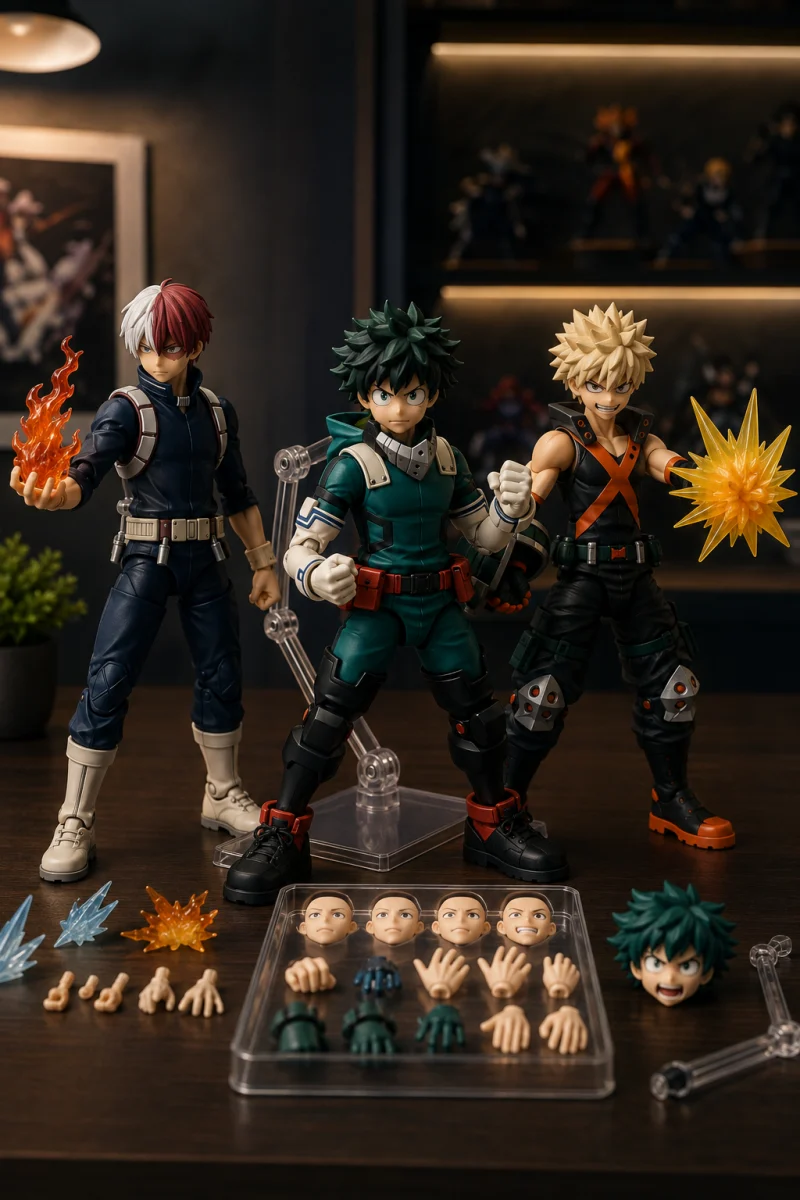
Anime Heroes is Bandai’s articulated anime action-figure line. The range features characters from established series including Naruto, One Piece, Jujutsu Kaisen, Bleach and Digimon. Individual releases are designed for posing, play and display, although figure size, articulation and included accessories vary by character and market.
Collecting quality is determined by character accuracy, articulation, included accessories, manufacturing consistency and the condition of the packaging. The anime doll brands and series reference places the range alongside related character lines, while the LORIBEAR shop provides current character-inspired products.
| Assessment area | Points to examine |
|---|---|
| Character accuracy | Face print, hair silhouette, costume colours and insignia. |
| Articulation | Joint range, clearance, stiffness and ability to balance. |
| Accessories | Hands, weapons, effects, stands and storage for small parts. |
| Authenticity | Manufacturer marks, licence details, product code and print quality. |
What is the Anime Heroes range?
Bandai presents Anime Heroes as a six-inch action-figure range based on popular anime properties. The official Anime Heroes brand page is the best reference for current series and manufacturer information.
The line is designed for posing and play-friendly display rather than the fixed composition of a scale statue. Individual releases vary, so always review the specific character rather than assuming every figure has the same joints or accessories.
Scale and shelf presence
A nominal six-inch figure is compact enough for most shelves, but height changes with the character and pose. Hair, hats, weapons and effect parts can extend beyond the body. Check the complete dimensions when planning a display case.
Figures from the same range generally look coherent together, but characters are not always reproduced at a mathematically exact scale. Collectors who value strict proportional accuracy should compare official measurements and photographs before building a mixed-character scene.
Articulation and posing
Articulated figures use joints at points such as the neck, shoulders, elbows, wrists, torso, hips, knees and ankles. More joints can create a wider pose range, but joint placement, clearance and balance determine how useful that range actually is.
Warm a stiff joint with your hands and move it gradually. Do not twist a hinge in a direction it was not designed to travel. Support small connections when changing hands or accessories, and keep a parts tray nearby so tiny pieces do not disappear.
Accessories and character accuracy
Extra hands, weapons and effect parts can transform a display, but they also increase the number of pieces to store. Check that the release includes the accessories shown in the listing and that they match the character version you want.
Character accuracy is a combination of face sculpt, hair shape, costume colour, insignia and silhouette. Online photographs should show the front, sides and back under neutral lighting. Close-ups of the eyes and costume printing are particularly helpful.
How to check authenticity
Official packaging should identify the manufacturer, licence holder and product line. Logos, copyright information and product codes should be cleanly printed. Compare the box and figure with images from the manufacturer rather than relying on a seller’s description alone.
Warning signs include blurred logos, spelling mistakes, missing company details, unusually soft facial printing and prices far below established retailers. Keep in mind that packaging can vary by market, so a difference is a reason to investigate, not automatic proof of a counterfeit.
Display and maintenance
Keep figures away from strong sunlight and high heat, which can fade paint or distort plastic. Dust with a soft brush while supporting delicate parts. If deeper cleaning is required, follow the manufacturer’s advice and test water or cleaner on an inconspicuous area first.
Use stable risers and avoid overcrowding. Dynamic poses may need a stand, especially when a weapon or effect part shifts the centre of gravity. Store unused accessories in labelled bags or small divided boxes.
Choosing an Anime Heroes figure
- Confirm the official character and costume version.
- Review articulation and included accessories.
- Check complete dimensions, not just nominal scale.
- Compare packaging with official manufacturer images.
- Plan safe display and accessory storage.
Whether you collect a single favourite character or a full team, a consistent scale and careful posing will make the display feel intentional. Continue through the Collector Guides directory for more figure, brand and display topics.
Frequently Asked Questions
What scale are Anime Heroes figures?
Bandai describes the range as approximately six inches. Actual height varies with the character, footwear, hair and pose, so individual product dimensions should be checked for display planning.
Are Anime Heroes figures designed for posing?
Yes. They are articulated action figures rather than fixed statues. Joint design and movement range differ between releases, and stiff joints should always be moved gradually.
How can a counterfeit figure be recognised?
Missing manufacturer details, blurred logos, spelling mistakes, weak facial printing and prices far below established retailers are warning signs. Comparison with official packaging and product images is essential.
Should the original packaging be retained?
Packaging protects accessories, helps establish product identity and can support resale value. It should be kept dry, away from sunlight and stored with the correct internal trays.