- Chainsaw Man
- Resident Evil
- Street Fighter
- Spy x Family Figures
- Azur Lane
- Final Fantasy
- Dragon Ball
- Naruto
- Neon Genesis Evangelion
- Nier: Automata
- Kuroinu Figures | Olga Discordia Dark Elf
- Queen Pharnelis-Goblin
- Non Virgin Bunny Girl
- Prison School
- The King of Fighters
- One Piece
- Figure Heads & Accessories
Rei Evangelion: Her Look, Quiet Courage and Lasting Appeal

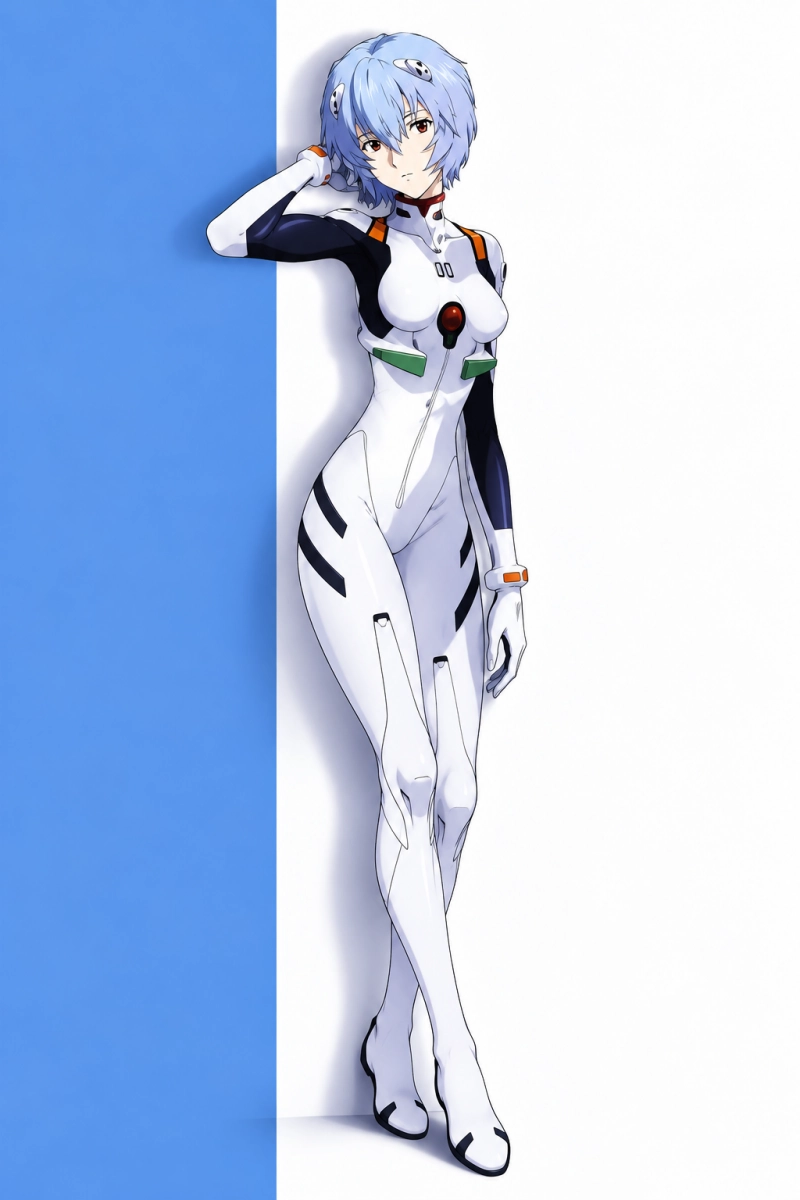
Rei Ayanami pilots Evangelion Unit-00 for NERV. Her short blue hair, red eyes and white plugsuit make her immediately recognisable, but her place in Evangelion depends on much more than her appearance. Shinji first meets her injured and still ready to carry out her assignment. Later, he discovers someone who can protect him in battle, cherish a memory and make decisions that surprise the people directing her life.
Her appeal grows through particular moments: protecting Shinji during Operation Yashima, keeping a damaged pair of glasses, or practising a recipe for a meal she hopes to share. Each gives something concrete to remember. Behind the familiar face is someone gradually discovering that her wishes can matter, even when the organisation around her has already decided what she is for.
Blue Hair and Red Eyes Create an Immediate Identity
Rei’s colour palette gives her a strong visual identity without an elaborate hairstyle or a crowded arrangement of accessories. The short blue hair frames her face, while the red eyes provide a contrasting focal point. Those features remain recognisable in a close portrait, a distant shot or a simplified drawing.
Her face often rests in a neutral expression. That stillness leaves room for several impressions at once: concentration, fatigue, detachment or uncertainty. The surrounding scene determines which impression makes sense. In a hospital setting, her reserve feels different from the same expression during a conversation with Gendo. Her appearance becomes more interesting when it belongs to a situation rather than standing alone.
The design also holds its identity across changes of clothing. A plugsuit places her inside NERV’s operations; everyday clothing shifts the setting without making her unrecognisable. Her short haircut and distinctive eyes do much of that work. There is a clear visual centre that survives the removal of the machinery, command screens and other familiar Evangelion imagery.
That clarity explains part of her appeal as an anime figure or illustrated character. A single depiction can bring back a particular version of Rei without recreating an entire battle. The strongest association might be her first appearance, the aftermath of Operation Yashima or a quieter moment away from the base. The same face carries different memories.
Her Voice Gives the Reserve a Human Presence
Megumi Hayashibara voices Rei in Japanese. Her restrained delivery gives even a short answer a particular weight. Rei rarely fills a pause with chatter, so the other person often has to decide whether to continue, wait or accept that the conversation has ended. Her voice makes the difficulty of reaching her audible.
A soft delivery does not make every line gentle. Rei can answer plainly, resist a suggestion or react sharply when something matters to her. The distinction is important: a limited display of emotion is different from an absence of emotion. Her response to criticism of Gendo, for example, reveals an attachment that her usual manner does little to advertise.
Shinji’s uncertainty around her gives those exchanges their awkwardness. He cannot always tell whether she wants company or simply tolerates his presence. Conversations sometimes stop before he receives the reassurance he hoped for. The difficulty feels recognisably human, even within a story filled with extraordinary technology.
As their relationship changes, a warmer response matters because it is specific to the encounter. Rei does not suddenly acquire a different voice or an endlessly cheerful personality. Small differences in how she answers can suggest that the person speaking to her has become important. Familiarity develops without erasing her distinctive manner.
 Operation Yashima Gives Her Courage a Clear Purpose
The official rei evangelion profile identifies her as Unit-00’s pilot and connects her emotional development with fighting alongside Shinji. Operation Yashima makes that connection especially tangible. He must fire the positron weapon while she protects him. Neither role works independently of the other.
The operation’s scale is spectacular, but Rei’s task is direct. She has to remain between Unit-01 and an attack that could destroy it. Her willingness to do so turns an otherwise technical plan into an act of trust. Shinji’s opportunity to complete the mission depends on her presence.
When he reaches her entry plug afterwards, the danger gives his concern an immediate reason. He is relieved that she is alive. Rei encounters a response to her as a person, not simply an assessment of how successfully she performed her assignment.
Her smile closes that encounter without explaining everything about her. Its power comes from the transition between danger and relief. A moment earlier, both pilots faced a desperate task. Now one of them is trying to tell the other that surviving matters. Rei’s response gives their connection a visible beginning.
The Glasses in Her Room Reveal an Attachment
Rei’s room gives little sense of a comfortable personal retreat. Among its sparse possessions, Gendo’s damaged glasses stand out because she has kept them. They connect to his rescue of her after a Unit-00 activation accident, when he opened the hot entry-plug hatch to reach her.
For Shinji, Gendo is an absent father who issues demands. Rei’s memory includes someone coming to help when she was in danger. Those experiences do not cancel each other. They explain why the same man can provoke different responses, and why Shinji struggles to understand her loyalty.
The glasses make that loyalty personal. They are an ordinary object carrying the memory of a particular action. Rei’s attachment becomes understandable even if Gendo’s wider behaviour remains troubling. She has a reason to value him that exists outside the orders he gives.
This detail also makes her later independence more meaningful. A person can feel gratitude and still reach a point where obedience is no longer the right response. Rei’s relationship with Gendo contains that possibility from the moment affection and authority become intertwined.
Cooking Reveals a Wish She Has Chosen Herself
In Evangelion: 2.0 You Can (Not) Advance, Rei practises cooking and plans a meal intended to bring Shinji and Gendo together. The task is small enough to understand immediately. She wants people who struggle to communicate to sit together, and she puts work into making that possible.
NERV has no operational reason to require this gathering. Rei creates the project herself. That is what makes it revealing. For someone accustomed to carrying out instructions, noticing a problem and deciding on her own response represents a change in how she participates in other people’s lives.
Food gives her care a practical form. She can learn, prepare and invite without first finding a way to explain every feeling behind the gesture. The intention appears through effort. Its appeal lies in how ordinary that effort is: a recipe and a shared table offer something the command centre cannot provide.
The Unit-03 crisis interrupts her plan. Its failure leaves a sense of a specific opportunity lost. A meal would not automatically repair Shinji’s relationship with his father, but Rei had found something she could try. Her hope is modest, personal and consequently easy to care about.
Different Incarnations Give Familiarity an Uneasy Edge
The original television series introduces successive incarnations of Rei, commonly known as Rei I, Rei II and Rei III. Rei II is the individual whose relationship with Shinji develops through much of the series. Recognising another incarnation’s face does not mean every shared experience continues unchanged.
That distinction creates a particular kind of loss. Shinji can see someone who looks familiar and still find that the relationship he remembers is missing. Appearance offers recognition without guaranteeing continuity. The question becomes less about identifying a face and more about understanding the person who now answers to the name.
In the Rebuild films, this problem takes a different form. The Rei associated with Mark.09 in Evangelion: 3.0 You Can (Not) Redo is not simply the individual Shinji tried to save in Evangelion 2.0. His expectations come from experiences she does not share in the way he assumes.
These differences make individual encounters valuable. A rescue, a conversation or a planned meal belongs to the people who experienced it. Repeating an appearance cannot recreate that history. Rei’s story gives a recognisable character design an emotional complication that remains unsettling after the mystery of her origins becomes clearer.
 Village Life Makes Everyday Experiences Matter
The later Rebuild incarnation encounters a different kind of life in Village-3 during Evangelion: 3.0+1.0 Thrice Upon a Time. People grow food, maintain households and help neighbours. Toji and Hikari’s family belongs to a community with routines that continue beyond the immediate demands of combat.
Rei learns through joining those routines. Work in the fields gives her a task alongside other people. Meals and greetings introduce forms of connection that do not depend on her position as a pilot. Her world acquires familiar people and activities she wants to return to.
There is still responsibility in village life. Crops need attention and families need food. The difference is that usefulness exists alongside companionship and the prospect of another ordinary day. Rei can contribute without every contribution ending in a test of her readiness for battle.
The emotional force comes from watching those experiences become hers. This incarnation does not need to reproduce another Rei’s memories to have a meaningful life. Her attachment to the community develops through her own participation. The village gives individuality a practical shape: people she knows, things she has learned and time she wants to spend.
Her Independence Completes the Impression
Rei’s reserve can make her appear passive, yet The End of Evangelion gives her a decision that Gendo cannot control. He expects her to participate in his plan. Instead, she refuses his wishes and responds to Shinji. Years of authority fail to secure the outcome he assumed was his.
The moment does not require her to become loud or theatrical. Her decision itself changes the relationship. She can retain the manner through which viewers recognise her while rejecting the purpose someone else has assigned. Her individuality becomes visible in what she will no longer do.
That is why Rei remains more than a distinctive face from a famous series. Her appearance draws attention, her restrained voice makes conversation unusually charged, and her actions give the reserve substance. Protecting someone, preparing a meal and refusing an expectation reveal different parts of the same central concern: whether a person can discover wishes of her own.
The television series and Rebuild films approach that concern through different events. Across them, Rei’s memorable moments remain concrete. There is a shield held in place, an object kept, food prepared and a community joined. Those details give affection for the character something lasting to rest on.
Frequently Asked Questions
Why is Rei Ayanami so reserved?
Her isolation and life within NERV provide important context. She rarely explains her feelings, but her attachments and decisions show that a restrained manner does not mean she feels nothing.
Who voices Rei in Japanese?
Megumi Hayashibara provides Rei’s Japanese voice. Her restrained delivery is an important part of the character’s familiar presence.
Why does Rei’s smile after Operation Yashima matter?
It follows shared danger and Shinji’s relief at finding her alive. The smile gives their developing connection a visible expression.
Are all versions of Rei one continuous individual?
No. Successive incarnations have different experiences, and the television series and Rebuild films develop separate versions of her story. A familiar face does not establish identical memories or relationships.
Where can I read more about Rei Ayanami?
Explore our Rei Ayanami character stories for more about her personality, relationships and role in Evangelion.