Anime Plushies: Types, Sizes and Buying Guide

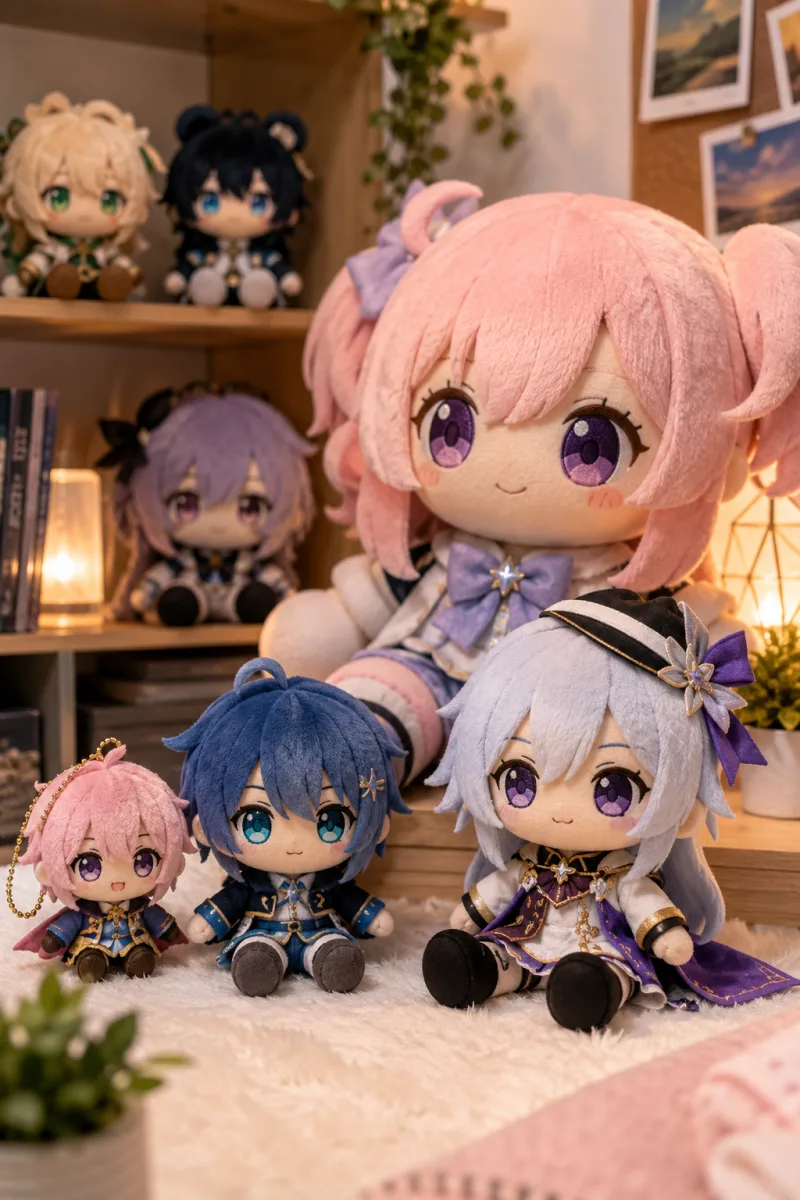
Anime plushies are soft character collectibles based on anime, manga and Japanese games. They range from palm-sized mascot keychains and compact nui dolls to larger character plushies and oversized cushions. Although buyers often begin with a favourite character, the exact version, size, facial accuracy, fabric, filling and intended use determine whether a plush works best for shelf display, photography, travel, gifting or regular handling.
The same character can appear in several plush formats, so a familiar name does not guarantee the same design. A chibi version may simplify the costume and enlarge the head, while a dressable nui may use a smaller seated body and removable clothing. Therefore, collectors should identify the exact product line and character version before comparing price or size.
Main Types of Anime Plushies
| Type | Typical characteristics | Best use |
|---|---|---|
| Chibi character plush | Large head, small body and simplified costume | Shelf collections and gifts |
| Nui or mascot plush | Compact seated body, embroidered face and removable outfits on some lines | Photography, ita bags and portable display |
| Plush keychain | Small character with chain, clip or strap | Bags and small-space collecting |
| Standard character plush | More complete costume and body proportions | Bedroom display and cuddling |
| Jumbo plush | Oversized body or head, usually lightly structured | Statement display and cushions |
| Plush doll with clothes | Dressable body with separate garments | Custom outfits and character photography |
Choose the Exact Character Version First
A character can appear in a school uniform, battle costume, seasonal outfit, anniversary design or completely redesigned chibi form. Therefore, the complete product name matters more than a generic description such as “cute anime plush.”
Start with the character, then identify the series, costume and expression. For example, two plushies may represent the same character but use different hairstyles, accessories or clothing from separate story periods.
Facial expression can also separate releases that otherwise look similar. Compare eye shape, eyebrow position, mouth embroidery, hair colour, costume symbols and included accessories with the official product photographs. A simplified chibi face can still preserve strong character identity when the maker keeps the most recognisable features intact.
Anime Plush Sizes and What They Actually Mean
Product photographs frequently make small plushies appear larger than they are. For this reason, always check height, seated height and width in centimetres rather than judging scale from the photograph.
- Under 15 cm: keychains, mascots and dense group displays.
- 15–25 cm: versatile shelf and photography size.
- 25–40 cm: fuller character body and stronger visual presence.
- Over 40 cm: large display, cuddling or cushion use.
A listed height may include hair, ears, hats or other projecting parts. Consequently, a 25 cm seated character can require more shelf clearance than another plush with the same advertised height.
Width matters as well. Large hairstyles, wings, oversized sleeves and accessories can make a plush difficult to fit into a narrow display even when its height appears suitable.
Measure Shelf Space Before Buying
When the plush will stay on a shelf, measure height, width and depth rather than height alone. A seated plush usually needs less vertical space but can occupy more depth because the legs extend forward.
For several characters, leave enough room between them so faces and costumes remain visible. Compressing plushies tightly together can hide accessories and gradually change their shape.
Large or lightly filled plushies also need support. If a model cannot sit upright by itself, a back wall, clear support or neighbouring cushion can help maintain the intended display position without forcing the head or limbs.
What Is a Nui Plush?
“Nui” commonly refers to compact character plush dolls used for portable display, photography and clothing customisation. Many designs use a seated or simplified body with an embroidered face and a hairstyle made from layered fabric pieces.
Some nui lines support removable clothing, which allows collectors to create seasonal outfits or photography themes. However, outfit compatibility depends on actual body measurements rather than the general term “nui.”
Before buying separate clothing, measure chest width, shoulder width, body length and leg length. In addition, check whether the head or hands can pass through the garment opening without stretching seams excessively.
Dressable Plushies and Clothing Fit
Dressable plush dolls create a different collecting experience because the collector can change outfits rather than keeping one permanent costume. A simple body can support uniforms, casual clothing, sleepwear or themed accessories.
Nevertheless, garments from one product line do not automatically fit another plush of similar height. Head size, shoulder width and body thickness can vary considerably.
Fasteners deserve attention as well. Small hook-and-loop strips, snaps and buttons should open without pulling on the plush fabric. Rough fasteners can catch short pile or embroidery, while dark fabrics may transfer colour during prolonged contact.
Facial Accuracy Matters More Than Complexity
The face usually carries the strongest character identity. A complicated costume cannot compensate for poorly positioned eyes or a hairstyle that no longer resembles the source design.
First, compare the spacing and angle of the eyes. Then inspect the mouth, eyebrows and hairline. Embroidery should sit evenly without pulling one side of the face out of shape.
Anime plush faces are often intentionally simplified. Therefore, accuracy does not require realistic proportions. What matters is whether the selected features still make the character immediately recognisable.
Embroidery Quality and Printed Details
Embroidery can produce sharp eyes, eyebrows and mouth details that tolerate regular handling well. However, excessive thread tension may create puckering around the face.
Inspect whether both eyes sit at the same intended height and whether the embroidery follows the curve of the head correctly. Loose thread ends around facial features deserve attention because repeated rubbing can make them worse.
Printed details allow gradients and very fine lines that embroidery cannot always reproduce. By contrast, printed surfaces may wear more quickly when the plush experiences frequent friction or washing.
Fabric Types and Surface Feel
Short-pile fabrics preserve embroidered and printed details clearly. Meanwhile, minky and velboa can create a softer surface that suits larger plush bodies.
Felt often appears on hair spikes, collars, weapons and costume decorations because manufacturers can cut it into detailed shapes. However, untreated felt edges may begin to fray after repeated handling.
Long-pile material creates a fluffy appearance but can obscure fine costume lines. Therefore, the best fabric depends partly on whether the design prioritises softness, facial detail or accurate clothing.
Filling Quality Changes the Shape
Polyester fibre fill controls softness and overall body volume. Even distribution helps the head, torso and limbs maintain the intended proportions.
Before buying a pre-owned plush, inspect photographs for a twisted neck, flat head, uneven arms or empty sections. These signs may indicate compressed or shifted filling.
Some seated plushies use weighted pellets in the lower body to improve balance. Ideally, the manufacturer contains those pellets inside a separate inner pouch so they cannot migrate throughout the body.
Official Licensed Plushies and Unofficial Products
An official plush normally identifies the manufacturer or distributor, character, series, copyright owner and product code. Sewn tags and packaging should correspond with the documented release.
However, one copied tag or hologram cannot prove authenticity by itself. Compare the complete product instead: seam layout, face embroidery, fabric colour, costume pieces, accessories and packaging.
Warning signs include blurred printing, misspelled character names, missing copyright information, visibly uneven facial placement and a price far below the normal range for the same release.
UK government guidance warns that counterfeit toys can fail chemical, flammability and small-parts requirements. The official counterfeit toy safety notice explains why an unknown source can create more than a collector-value problem.
Compare the Actual Plush, Not Only Stock Images
Official photographs help identify the intended design, but they cannot show the condition of an individual second-hand item. Therefore, marketplace buyers should request photographs of the actual plush.
Ask for clear views of the front, back, face, sewn tags and removable accessories. In addition, check whether the seller photographed the plush under neutral lighting because strong filters can hide stains or colour fading.
For pre-owned items, ask about smoke exposure, storage odours, missing accessories, flattened filling and previous washing. These issues can matter more than a minor crease in the original paper tag.
Toy, Collectible or Display Item
Soft construction does not automatically make every anime plush suitable for unrestricted play. Collectible releases can include magnets, chains, metal clips, detachable clothing or small decorative parts.
Therefore, check the age recommendation and product safety information before giving a collectible plush as a toy. Packaging may also state whether the item targets display or general play.
The UK government’s toy safety guidance for Great Britain describes the responsibilities attached to products sold as toys. Collectors should still inspect loose parts whenever a display remains within reach of children.
Anime Plushies as Gifts
A successful anime plush gift begins with the exact character. Knowing that someone likes an anime series is not always enough because they may care strongly about one particular character.
Next, consider how the recipient collects. A small mascot works well for bags and desks, while a 20–30 cm plush provides more visible costume detail. By contrast, a jumbo plush requires much more permanent space.
When you do not know the preferred costume version, a recognisable standard outfit may be safer than a highly specific seasonal release. Also check whether the recipient already owns the same design.
Where Anime Plushies Fit in a Collection
Plushies emphasise softness, simplified proportions and portability. Scale figures focus more on rigid sculpting and detailed poses, while articulated figures add movement and interchangeable components.
The Anime Figures & Collectibles reference organises these different formats without treating them as interchangeable products.
A mixed collection can combine a plush with figures based on the same character or series. For example, a small nui can sit in front of a larger rigid figure to create variation in scale and texture.
However, leave enough separation to prevent metal keychains, rough plastic bases or dark fabrics from rubbing continuously against neighbouring collectibles.
Using Anime Plushies for Photography
Nui and compact plushies work particularly well for photography because they travel easily and require little setup. Their simplified expressions can also remain readable in a small image.
For outdoor photography, keep the plush away from wet ground, rough stone and surfaces that may transfer colour. A small transparent stand can help maintain the pose without becoming visually dominant.
Clothing and accessories can create seasonal scenes. However, oversized props can make the plush appear smaller than intended, so match prop scale to the character whenever possible.
Buying Anime Plushies in the UK
UK stock usually simplifies delivery and returns, while Japanese imports may provide access to limited releases that local retailers do not carry.
For imported products, calculate the complete cost rather than comparing the item price alone. International postage, VAT, handling charges and possible delays can substantially change the final amount.
Pre-order listings should identify the expected release window and cancellation terms. Keep the exact product name and reference image so you can confirm the correct version when the order arrives.
Buying Pre-Owned Anime Plushies
Pre-owned plushies can offer discontinued characters and older releases, but condition deserves careful inspection.
First, check the face and hair for stains or uneven fading. Next, inspect seams around the neck, arms and legs because those areas receive repeated stress during handling.
Ask whether detachable accessories remain complete. A missing hat, ribbon or costume piece can change the character design significantly even when the main plush remains in good condition.
Cleaning Without Damaging the Character
Always begin with the care label. Surface cleaning may suit products with electronics, cardboard inserts, glued details or delicate printing.
A plain fibre-filled plush may allow gentle hand or machine washing, but only when the manufacturer confirms that method. Do not assume soft fabric automatically means the entire product tolerates immersion.
Before washing, remove detachable clothing and accessories when possible. In addition, test colourfastness and close any fasteners that could catch surrounding fabric.
Drying and Reshaping Anime Plushies
After cleaning, reshape the head, face and limbs while the filling remains flexible. This prevents the body from drying in a twisted position.
Use circulating room-temperature air unless the care label approves another method. High heat can deform synthetic fibres, damage adhesives or change printed details.
Large plushies need more drying time because moisture can remain deep inside the filling even after the outer fabric feels dry. Therefore, do not return a large plush to closed storage too quickly.
Display and Dust Control
Direct sunlight can fade fabric, printed details and embroidery. Therefore, long-term displays work better away from strong windows.
Dust tends to collect in fabric pile, hair seams and costume folds. A cabinet reduces exposure, while a soft brush can remove loose surface dust from an open shelf display.
When moving the plush, support the torso rather than pulling it by hair, ears, chains or costume accessories.
Long-Term Storage
Do not compress the face beneath heavier plushies during long storage because sustained pressure can flatten filling and distort embroidery placement.
Store paper tags flat and dry when they matter to the collection. If the plush remains inside a plastic bag, confirm that no moisture is trapped inside first.
In addition, avoid airtight storage in locations with large temperature changes. Clean, dry and lightly supported storage usually preserves shape more effectively than tightly packing many plushies into one container.
Anime Plush Buying Checklist
- Confirm the exact character, costume and expression.
- Check the product line rather than relying only on the character name.
- Read height, seated height and width in centimetres.
- Check whether measurements include hair, ears or accessories.
- Compare official product codes, tags and reference photographs.
- Inspect embroidery alignment, seams, filling and attached accessories.
- Confirm whether clothing or accessories can be removed.
- Check age grading and small-part warnings.
- Add postage, tax and import fees to the total price.
- Inspect the actual item carefully when buying pre-owned.
- Choose a cleaning method that matches the internal construction.
- Plan enough display and storage space before buying a jumbo plush.
Frequently Asked Questions
What is the difference between an anime plush and a nui?
Anime plush is the broad category. “Nui,” shortened from the Japanese word for stuffed toy, often refers to compact character plush dolls used for outfits, photography and portable display.
How can I tell whether an anime plush is official?
Match the maker, product code, copyright tag, seam pattern and accessories with official photographs. Price and a single hologram should not be used as the only evidence.
What anime plush size is best for a shelf?
Plushies around 15–25 cm usually balance visible character detail with manageable shelf space. However, measure seated height and width because the listed length may include hair or accessories.
Can anime plushies be machine washed?
Only when the care label permits it. Electronics, glued details, printed coatings, magnets and internal cardboard can make machine washing unsuitable.
Are imported anime plushies safe for children?
Not automatically. Check age grading, safety markings, small parts and the seller’s identity. A collectible designed primarily for display may have different requirements from a product sold specifically as a child’s toy.
Should anime plushies stay in their original packaging?
Not necessarily. Original packaging can help preserve tags and resale condition, while open display allows easier enjoyment and photography. Whichever method you choose, keep the plush dry, away from direct sunlight and free from long-term compression.
Explore the LORIBEAR Collection
If your interest in anime characters extends beyond soft plush collectibles, visit the LORIBEAR shop to explore the character-focused adult products currently available from GKDOLL.uk. The collection includes anime-inspired sex dolls in different sizes, character designs and material configurations, including TPE, silicone and mixed-material options.
Browse the current LORIBEAR collection to compare available characters, sizes, materials and designs and find the character product that best matches what you want to add to your private collection.